
Hinge. Don’t Cup or Bow
Hinge. Don’t Cup or Bow means bending the wrists naturally without curling (cupping) or bending…
Read More 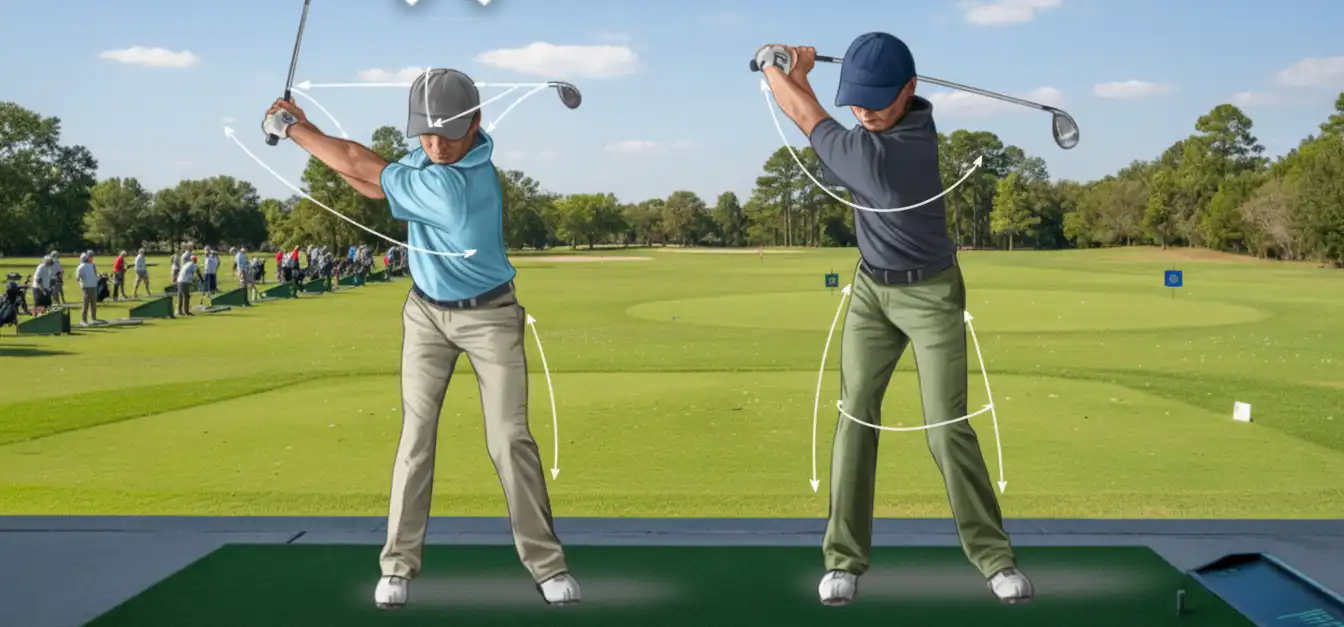
Creates Leverage and Stored Energy
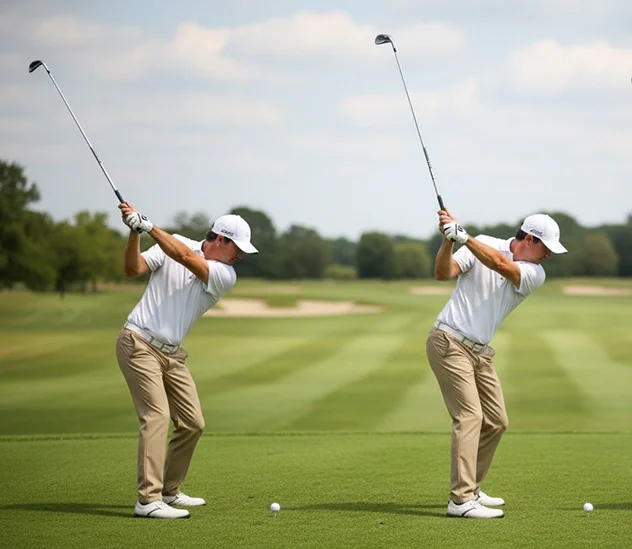
A balanced hinge guides the club to a stable top position. Without this hinge the club often gets laid off too flat or becomes too steep which leads to timing issues during the downswing.
When your wrists hinge correctly the clubface remains square and predictable. Golfers who skip the hinge or hinge too late often fight inconsistent direction and weaker strikes.
Let the Hinge Build Gradually
A relaxed lead arm helps maintain width while allowing the wrists to set cleanly. Too much tension restricts movement and leads to a forced hinge.
As your wrists hinge the clubface should stay square rather than flipping open or closed. A square clubface at the top prepares you for a controlled transition.
Instead of forcing hinge motion use the weight of the clubhead to help your wrists set naturally. This builds a more repeatable top position and prevents strain.
A full hinge does not mean a dramatic or exaggerated position. Aim for a strong clean angle that supports power without sacrificing control.
 Top of the Swing
 Categories
They happen when your spine, hips and shoulders move in perfect harmony.
Turn every swing into a lesson. Try SpineAlign free.