Master Your Swing with Real Answers to Golf Swing Faults
Stop guessing and start correcting your swing problems.
Use SpineAlign to identify golf swing faults and apply precise swing corrections.
Select a category below to see all the questions with the detailed explanations
SLICE (ball curves right)
Likely Cause
Open clubface Outside-to-in path Weak grip
Typical Fix / Focus
Strengthen grip Improve clubface control Inside-to-out path
SpineAlign Correction
It shows you how to maintain proper spine angle, turn your legs properly, and rotate shoulders at the right angley to prevent slicing
Description:
A slice occurs when the ball curves to the right (for right-handed golfers). The primary cause is an open clubface relative to the swing path at impact.
Note: A push is not a slice — it’s a straight shot that travels right due to alignment issues, not an open face.
We will be referring to a right-handed golfer.
All of the fixes below are taught in our Golf Academy.
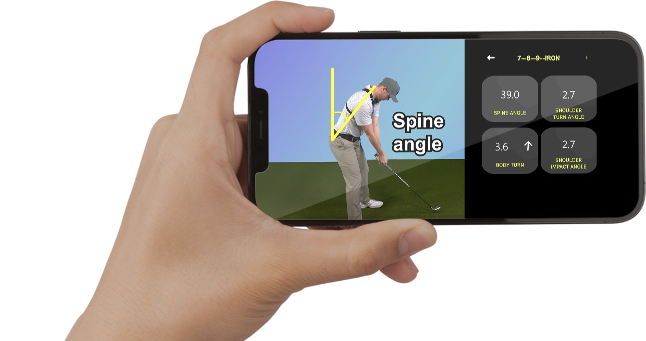
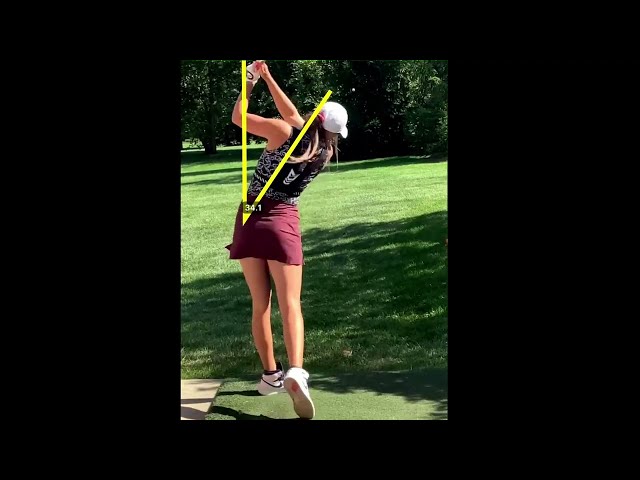
SpineAlign focuses on teaching the CRITICAL ANGLES that define a consistent and powerful golf swing:
Spine Angle — based on the club being used
Lower Body Mechanics — emphasizing proper hip turn angles
Shoulder Turn Angle — at the top of the backswing
Shoulder Impact Angle — through contact
These are the foundational principles of a sound golf swing—essential concepts that are rarely taught, yet vital for mastering proper mechanics and improving performance.
Main Causes and Corrections
Cause:Sliding forward.
Correction:Perfect your lower body mechanics and maintain proper shoulder turn angles. SpineAlign helps eliminate unnecessary movement.
Cause:Improper sequencing of the hips, spine, and shoulders with similar out-to-in swing path results as previous 4 faults.
Correction:Start by fixing your Spine Angle then work on Lower Body Mechanics. Finish by training correct shoulder rotation. SpineAlign instantly guides these movements for consistent, on-plane swings.
Cause:A firm, tight grip restricts wrist release, keeping the face open at impact.
Correction:Hold the club with lighter pressure. Allow natural wrist hinge and release. Don’t force the motion with your hands. It happens naturally. On a 1-10 Scale, hold the club with a pressure of 3-4.
Cause:Insufficient hip and lower-body rotation.
Correction:Always remember that the foundation of a good golf swing begins with proper Spine Angle and Lower Body Mechanics. Use SpineAlign to determine correct Spine Angle for your club and then use the hip belt to train proper rotation, leg movement, knee flexing, and minimum hip turn angle. Don’t begin adjusting your upper body mechanics until you’ve mastered the fundamentals of hip and leg rotation. Stop working on your takeaways, swing plane, and hand mechanics. Focus on lower body first!
Correction:Usually this is not a problem although it is commonly referenced as a fault. Try to maintain a straight left arm through impact, then allow it to fold naturally after contact. Proper sequencing ensures this happens without tension.
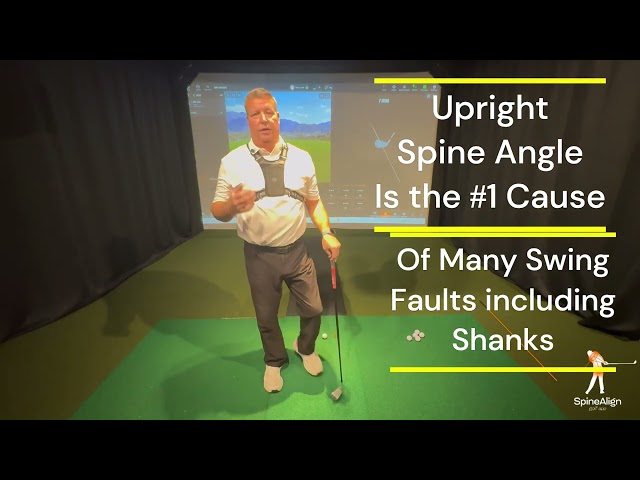
Cause:This is a result of the breakdown of the critical angles and mechanics of a golf swing: starting with an incorrect spine angle, lacking athletic leg movement, allowing hips to sway laterally, losing spine angle, separating arms from torso, and turning shoulders into wrong position. Also review the Upright Spine Angle content.
Correction:Use SpineAlign to fix the CRITICAL ANGLES. The system trains proper posture, athletic hip-leg movement, and ideal shoulder turn. When these angles are perfected your club path will fall into alignment. All without confusing drills.
Cause:Improper lower-body sequencing.
Correction:Use the SpineAlign App and hip belt with the “windmill” drill to master weight transfer and balance.
Cause:Tilting or leaning the spine towards your left side during the backswing. This is normally caused by hips swaying laterally. It can also be caused by excessive shoulder turn angle when trying to keep your head “connected” to the ball.
Correction:Focus on correcting your hip turn angle and leg movement to achieve proper weight distribution. Maintain proper spine posture from start throughout the swing. Complete your training by developing consistent shoulder turn angles from takeaway through impact. Your left shoulder should line up at the correct angle behind the ball at backswing. SpineAlign teaches you these fundamentals.
Cause:Incorrect setup leads to breakdowns throughout the swing.
Correction:SpineAlign automatically adjusts Spine Angle and posture based on your club. Good stance, proper spine angle, and lower-body movement are the foundation for every swing.
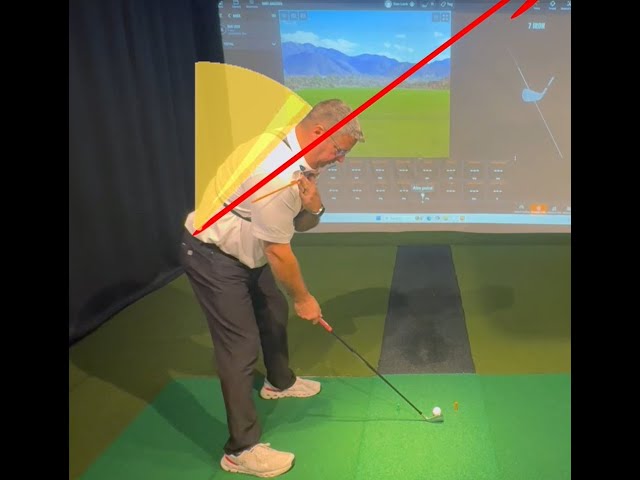
Cause:Incorrect Spine Angle. Standing too close to the ball usually results from an upright spine angle, which causes poor setup and improper posture. “Standing too tall” causes you to move closer to the ball which creates a crowded condition for your arms. This restricts your swing path, often forcing the club to move away from the body on an outside takeaway. As the arms separate from the torso, the downswing tends to cut across the body at impact, leading to inconsistent contact and loss of power. This will cause a slice with an open clubface or a pull with a square clubface.
Correction:Use the SpineAlign App to establish the correct spine angle for the club you’re using while standing away from the ball. Keep your left arm straight but allow your arms to hang naturally with the clubface square on the ground. Then, step toward the ball while maintaining that same spine angle. The proper spine angle automatically sets the ideal distance from the ball and promotes a natural, repeatable swing. With this foundation, your arms will move straight back and through in line with your body, initiating a consistent and efficient swing sequence.
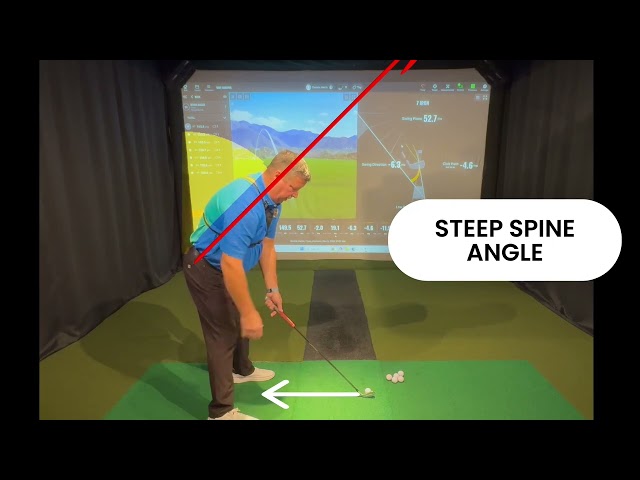
Cause:A Steep Spine Angle will cause you to stand too far from the ball. This will separate your arms and hands from your body as you address the ball. In some cases, it will cause a slice when the clubface is open at impact.
Correction:Use the SpineAlign App to put yourself in the right posture with the correct spine angle for the chosen club.
Cause:Rushing disrupts rhythm and timing.
Correction:During a full swing use a simple tempo count — say “1 and 2” during your swing. “1” is takeaway, “and” is transition, “2” is impact. If you reach the top before “and,” your tempo is too quick. When training use a “1.2.3” count during backswing and same during downswing to slow down your practice tempo and engrain your swing mechanics.
Cause:Compensating for a breakdown or failure to maintain the CRITICAL ANGLES. It is also a result of a Steep Spine Angle causing a hockey or baseball type swing as your body moves too far from the ball.
Correction:SpineAlign teaches you all the proper body angles, allowing the club to stay on path naturally. Follow our Academy lessons to learn how to build your swing from the ground up and eliminate fixes that don’t work.
Cause:This is the same as Starting Too Close To the Ball, when your spine angle is too Upright. Starting with a Flat, Upright Spine Angle can cause you to push your arms away from the body to compensate for the bad posture. It also a result of trying too many swing plane corrections instead of fixing the FUNDAMENTAL ANGLES of the swing, starting with spine angle and lower body mechanics and then working on upper body shoulder movement.
Correction:Always go back to the basics taught in our Academy lessons. Keep elbows close to your body during first half of the backswing while focusing on the key fundamentals! Allow right elbow to separate only during extension at end of backswing, making sure that you return it to the side of your body during downswing. Rotate the right arm outward, not upward or inward, to maintain plane and power.
Cause:Hands gripping too far to the right force the clubface open at impact.
Correction:Use a grip training aid to learn proper placement and maintain a square face through impact. Do not fabricate a new grip.
Common Misconceptions
This advice is fine but only after your core angles are correct. Fix spine, hip, and shoulder positions first; hand and wrist motion will then fall into place naturally. Trying to fix hand movement without correcting the CRITICAL ANGLES first is not recommended.
Over-adjusting aim to compensate for a slice ruins consistency and can lead to numerous other bad habits. The only alignment to check is ball position. Make sure it’s not too far back in your stance.
Moving your trail (right) leg back can minimize a slice temporarily, but it hides problems in leg mechanics and upper-body rotation. Work with SpineAlign to align your hips, spine, and shoulders correctly.
Use a grip training aid to learn a proper grip. Don’t start excessive hand movement during the takeaway. Maintain a slightly closed face during takeaway that leads to a square face at impact. Light grip pressure helps encourage natural hand movement and release. Do not hinge or cup your hands toward your biceps. Focus on extending your right wrist back like a pickleball racquet towards the outside of your forearm. Remember: light grip pressure (3-4 on a 10 scale) helps encourage natural release. This happens when you have proper lower body movement, ideal spine angle, and correct shoulder turn angles.
This best advice is rarely taught correctly. Real posture correction means mastering the angles of your spine, shoulders, and hips. SpineAlign ensures these positions are set and maintained through your entire swing.
Forcing hooks may help you feel a closed face but won’t fix the cause. Focus on rebuilding correct hip, spine, and shoulder angles.
Exaggerating an inside-out path can mask the problem. It won’t fix it the correct way. Changing your swing path without addressing your body angles is like putting a bandage on a serious wound.
Turning your hands to the right may square the face temporarily, but it doesn’t fix underlying mechanics. It may cause you to start drawing or hooking the ball. Strong grips are for shaping draws, not repairing bad movement. Use SpineAlign to retrain your critical angles instead.
Classic advice that only works if your critical angles are correct. When your posture and hip mechanics are wrong, you’ll force compensations everywhere else. With proper angles, the club naturally finds the slot on its own. Fabricating or trying to drop the club in the slot may work for pros but that takes a lot of practice.
Conclusion
Most golfers chase fixes that address symptoms — not causes.
Slicing is a result of incorrect body angles that disrupt balance, sequencing, and rotation.
The SpineAlign App and training accessories remove the guesswork by helping you learn and feel the correct CRITICAL ANGLES: hip, spine, and shoulder movements that make every other part of your swing fall into place.
The sequence of movements in the golf swing is one of the most critical factors in achieving consistent, powerful, and efficient results. A proper swing depends on a synchronized chain of motion between the upper body, lower body, and arms. When any part of this sequence occurs out of order, it can lead to poor contact, reduced power, and inconsistent ball flight.
Maintaining the correct spine angle, combined with balanced hip and shoulder rotation, enables the body to move in proper sequence. Executing these motions with the right order, rotation, and timing produces an efficient, repeatable swing that maximizes both control and distance.
The SpineAlign Training System helps golfers master this sequence by reinforcing correct posture, spine angle, and rotational mechanics. With real-time feedback and structured training, SpineAlign improves body awareness and builds the precise movements needed to maintain proper sequencing throughout the entire swing.
Train smarter, not harder. Let SpineAlign correct your critical angles so you can focus on what matters most: a consistent, powerful, repeatable swing.
HOOK (ball curves left)
Likely Cause
Closed clubface Excessive inside path Strong grip
Typical Fix / Focus
Neutralize grip Quiet hands Better path
SpineAlign Correction
Same as Slice, with emphasis on simplifying swing thoughts and instant corrections
Description:
A golf hook occurs when the clubface is closed relative to the swing path at impact, causing the ball to curve sharply from right to left for a right-handed golfer. This is the opposite of a slice, which curves from left to right.
We will be referencing a right handed golfer. All of the fixes below are taught in our Golf Academy. SpineAlign focuses on teaching the CRITICAL ANGLES that define a consistent and powerful golf swing:
Spine Angle — based on the club being used
Lower Body Mechanics — emphasizing proper hip turn angles
Shoulder Turn Angle — at the top of the backswing
Shoulder Impact Angle — through contact
These are the foundational principles of a sound golf swing—essential concepts that are rarely taught, yet vital for mastering proper mechanics and improving performance.
Main Causes and Corrections
Cause:Bad alignment. When the ball is positioned too far left of center with your irons, your hands tend to overextend and flip through impact, often resulting in a hook.
Correction:Align your ball position according to the club you’re using. For drivers, the ball should be near your front big toe, then move it about one inch toward the middle for each shorter club. Wedges should be positioned around the center or no more than one inch to the right of center. Avoid placing the ball more than an inch right of middle with high-lofted wedges. You’ll achieve greater consistency when the ball is positioned near the center, as that aligns with the bottom of your natural swing arc.
Cause:Shoulders or feet that are aimed too far to the right of the target encourage in-to-out swing paths which can lead to flipping the hands to save the shot.
Correction:Proper Alignment! Stop trying drills that direct you to change your foot positions, alignment, stance, or swing plane.
Cause:Hands turned too far to the right, forcing the clubface closed at impact.
Correction:Use a grip training aid to learn proper placement and maintain a square face through impact. Do not fabricate a new grip.
Cause:Same as the Out-To-In swing path. Improper critical angles lead to poor sequencing of the hips, spine, and shoulders.
Correction:Fix your critical angles: spine, hip turn, and shoulder turn. Always work on lower body rotation first followed by correcting shoulder turn angles. SpineAlign instantly guides these movements for consistent, on-plane swings.
Cause:Allowing too much wrist release or trying to manipulate your hand/wrist movement to make up for other swing faults. Overly aggressive wrist rotation, or “flipping” the hands, through impact can cause the clubface to shut down too early. Conversely, a lack of extension or “cupping” in the left wrist can also close the clubface.
Correction:Hold the club with relaxed firm pressure. Allow natural wrist hinge and release — don’t force the motion with your hands. It happens naturally. Work on the CRITICAL ANGLES before training your hand movement. On a 1-10 Scale, hold the club with a pressure of 3-4.
Cause:A flat swing, often resulting from an inside takeaway, can force you to manipulate the club with your hands and close the clubface at impact. This is often a result of setting up with a Steep Spine Angle which causes you to move further away from the ball.
Correction:Stop trying to fix your swing plane or manipulate your takeaway. Focus on starting at the right Spine Angle for the chosen club. The SpineAlign system trains proper posture, correct Spine Angle, athletic hip and leg movement, and optimal shoulder rotation. When these elements are properly aligned, your club path naturally falls into place. No complicated drills required. No quick fixes!
Cause:Insufficient hip and lower-body rotation leading to flipping of the wrists/hands to try and save the shot.
Correction:Use the SpineAlign App with the hip belt to train proper rotation. True rotation begins with the lower body. Stop working on your takeaways, swing plane, and hand mechanics. Focus on lower body and learn to turn hips and legs correctly!
Cause:Separating the arms away from torso by taking the club too far outside will cause a bad Hook with closed clubface or a push with square clubface. This is often caused by starting with a Flat, Upright Spine Angle. It is also caused by allowing the lower body to sway laterally during the backswing. It can also happen when Standing Up during the backswing.
Correction:Maintain correct body angles. Don’t manipulate the club during takeaway. The SpineAlign system trains you how to start and maintain correct Spine Angle, proper lower body movement, and correct shoulder turn. When these angles are perfected your club path will fall into alignment. All without confusing drills and quick fixes.
Cause:Improper lower-body sequencing, placing too much weight on your left side, and swaying due to flat hip turn.
Correction:Use the SpineAlign App and hip belt with the “windmill” drill to master weight transfer and balance.
Cause:A tilt of the upper body to the left during backswing. This is normally a result of poor lower body mechanics. Sometimes it happens because of trying to keep the head steady and stay “connected” to the ball. There is usually too much weight being placed on the Left Side.
Correction:Use SpineAlign with the hip belt to train proper rotation, leg movement, and hip turn angle. Don’t begin adjusting your upper body mechanics until you’ve mastered the fundamentals of hip and leg rotation. Proper leg and hip movement form the foundation of a powerful and consistent golf swing.
Cause:Incorrect setup leads to breakdowns throughout the swing.
Correction:SpineAlign automatically adjusts spine angle and posture based on your club. Good stance, proper Spine Angle, and lower-body movement are the foundation for every swing.
Cause:Poor posture and improper setup often start with standing too far from the ball. This is typically the result of a steep spine angle at address. When your spine angle is too steep, your body naturally moves farther away from the ball, forcing you to reach for it. Reaching changes your backswing mechanics. Your arms can no longer move on a straight path, so they are forced into an inside takeaway. This altered path leads to excessive hand and wrist manipulation, causing the clubface to flip and close at impact.
Correction:Maintain the correct Spine Angle for the club you’re using and approach the ball while keeping that angle. SpineAlign helps you establish the ideal distance from the ball. This begins a more natural swing where your arms stay relaxed but connected to the body allowing them to move straight back and through. This proper setup improves contact, accuracy, and consistency…leading to a more efficient and repeatable swing.
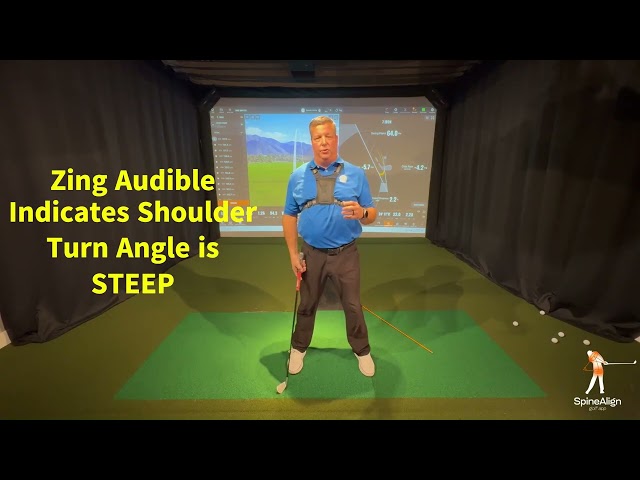
Cause:Excess Shoulder Turn Angle during backswing is often a result of bad lower body rotation, commonly known as a Reverse C Spine Angle. It is the result of hips swaying laterally. It is also a problem when you start at a Steep Spine Angle. A Steep Spine Angle will cause you to turn your shoulders down excessively unless you try to compensate by moving up in the backswing. It can also happen if you are starting at an Upright Spine Angle and then you try to compensate by lowering your shoulders and upper body during the backswing.
Correction:Use SpineAlign with the chest vest to start at the correct Spine Angle. Then use the hip belt to train lower body movement. Finish training by reaching the correct shoulder turn angle at the top of your backswing.
Cause:Rushing disrupts rhythm and timing.
Correction:Use a simple tempo count — say “1 and 2” during your swing. “1” is takeaway, “and” is transition, “2” is impact. If you reach the top before “and,” your tempo is too quick. When training, you can also count 1,2,3 during backswing and same during downswing as a slower tempo will help engrain all the drills we provide in our Academy.
Common Misconceptions
Over-adjusting aim to compensate for a hook ruins consistency and can lead to numerous other bad habits. The only alignment to check is ball position: make sure it’s not too far forward in your stance for irons.
Use a grip training aid to learn a proper grip. Don’t start excessive hand movement during the takeaway. Maintain a slightly closed face during takeaway that leads to a square face at impact. Light grip pressure helps encourage natural hand movement and release. Do not hinge or cup your hands toward your biceps. Focus on extending your right wrist back like a pickleball racquet towards the outside of your forearm. Remember: light grip pressure (3-4 on a 10 scale) helps encourage natural release. This happens when you have proper lower body movement, ideal spine angle, and correct shoulder turn angles.
The best advice is rarely taught correctly. Real posture correction means mastering the angles of your spine, shoulders, and hips. SpineAlign ensures these positions are set and maintained through your entire swing.
Moving your trail (right) leg forward can minimize a hook temporarily, but it can cause problems with leg mechanics and upper-body rotation. It will then lead to a slice. Work with SpineAlign to align your hips, spine, and shoulders correctly.
Forcing fades may help you feel a square face but won’t fix the cause. Focus on a proper grip and rebuilding correct hip, spine, and shoulder angles.
Exaggerating any path changes without addressing your body angles is like putting a bandage on a serious wound. It will usually create other problems.
Classic advice that only works if your critical angles are correct. When your posture and hip mechanics are wrong, you’ll force compensations everywhere else. With proper angles, the club naturally finds the slot on its own. Fabricating or trying to drop the club in the slot may work for pros but that takes a lot of practice.
Turning your hands to the left may be needed if your grip is too “strong.” Use a grip trainer every time you second guess your grip. However, do not mistake this with weakening the grip pressure. A grip pressure that is too weak can actually cause a hook as it can cause flipping of the club. If your grip pressure is too strong it actually causes a slice as your hands lag behind at impact.
Conclusion
Most golfers chase fixes that address symptoms — not causes.
Hooking is a result of incorrect body angles that disrupt balance, sequencing, and rotation.
The SpineAlign App and training accessories remove the guesswork by helping you learn and feel the correct CRITICAL ANGLES: hip, spine, and shoulder movements that make every other part of your swing fall into place.
The sequence of movements in the golf swing is one of the most critical factors in achieving consistent, powerful, and efficient results. A proper swing depends on a synchronized chain of motion between the upper body, lower body, and arms. When any part of this sequence occurs out of order, it can lead to poor contact, reduced power, and inconsistent ball flight.
Maintaining the correct spine angle, combined with balanced hip and shoulder rotation, enables the body to move in proper sequence. Executing these motions with the right order, rotation, and timing produces an efficient, repeatable swing that maximizes both control and distance.
The SpineAlign Training System helps golfers master this sequence by reinforcing correct posture, spine angle, and rotational mechanics. With real-time feedback and structured training, SpineAlign improves body awareness and builds the precise movements needed to maintain proper sequencing throughout the entire swing.
Train smarter, not harder. Let SpineAlign correct your critical angles so you can focus on what matters most: a consistent, powerful, repeatable swing.
Fat Shot (chunking)
Likely Cause
Hitting ground first Poor weight shift Early release
Typical Fix / Focus
Shift weight forward Control low point
SpineAlign Correction
Helps you to set up to the ball correctly, start with the proper spine angle, rotate properly, and prevent unnecessary up-and-down movement
Description:
when the club strikes the ground before the ball, causing a divot and a loss of distance. The swing’s low point is too far behind the ball.
We will be referring to a right-handed golfer. All of the fixes below are taught in our Golf Academy. SpineAlign focuses on teaching the CRITICAL ANGLES that define a consistent and powerful golf swing:
Spine Angle — based on the club being used
Lower Body Mechanics — emphasizing proper hip turn angles
Shoulder Turn Angle — at the top of the backswing
Shoulder Impact Angle — through contact
These are the foundational principles of a sound golf swing—essential concepts that are rarely taught, yet vital for mastering proper mechanics and improving performance.
Main Causes and Corrections
Cause:Bad alignment. Ball too far forward.
Correction:Review our Academy Lesson 4 on how to achieve proper alignment.
Cause:Improper sequencing of the hips, spine, and shoulders.
Correction:Fix your hip and spine angles first, then train correct shoulder rotation. SpineAlign instantly guides these movements for consistent, on-plane swings.
Cause:Using your hands and upper body to make up for poor body angles.
Correction:Maintain correct body angles. The SpineAlign system gives you instant feedback on the critical angles that you must achieve during a golf swing so that you don’t end up compensating for poor mechanics.
Cause:Gripping the club too high.
Correction:Leave at least 1 thumb width from the end of the club to where you grip. Even though this may seem like you are choking down, it will help prevent fat shots.
Cause:Tilting or leaning the spine during the backswing due to incorrect lower body movement. This usually results in a reverse spine angle that places too much weight on the left side causing a steep or flat swing that hits heavily into the ground.
Correction:Start with the correct Spine Angle and work on lower body mechanics using our “windmill” exercise. SpineAlign shows you how to turn your hips and legs so that you learn how important lower body rotation is for a golf swing! Once you master your leg and hip movement, complete your training by developing consistent shoulder turn angles from takeaway through impact.
Cause:Poor lower body mechanics, particularly failing to achieve proper hip turn angle which caused a right-side lateral shift of the body. This will also lead to multiple other swing problems as the upper body will try to compensate for incorrect leg and hip turn.
Correction:Start with the correct spine angle and work on lower body mechanics using our “windmill” exercise. Correct any swaying. SpineAlign shows you how to turn your hips and legs so that you learn how important lower body rotation is for a golf swing!
Cause:Poor lower body mechanics, particularly failing to properly rotate the hips and legs during the downswing. This can cause the upper body to dominate the swing resulting in a loss of power and distance by forcing you to “cast” the club into the ground with your hands. It can also lead to multiple upper body compensation changes that result in additional swing issues.
Correction:Start with the correct Spine Angle and work on lower body mechanics using our “windmill” exercise. SpineAlign shows you how to turn your hips and legs so that you learn how important lower body rotation is for a golf swing! An ideal golf swing starts with the lower body. It does not start with upper body rotation.
Cause:Too much shaft lean trying to generate club lag.
Correction:Never lean any club shaft more than the inside of your left leg. Excess shaft lean will cause incorrect takeaway and promote a vertical path.
Cause:Not starting out in the correct Spine Angle based on the club chosen. This leads to a cascade of other errors.
Correction:Maintain correct Spine Angle based on the club used. Focus on turning the lower body at the correct Spine Angle so that you can maintain proper Spine Angle. Continue by perfecting your shoulder turn angles. The SpineAlign system gives you instant feedback on proper Spine Angle and continues with Lower Body and Shoulder Turn mechanics.
Cause:Bad posture.
Correction:Review our Academy Lessons 2- 4 on how to achieve proper posture and alignment.
Cause:Poor Posture and improper set up. Being too close to the ball forces wrong takeaway and incorrect swing path. It is usually a result of starting at an Upright Spine Angle. This can lead to compensation by moving the upper body down during the downswing.
Correction:Achieve the correct Spine Angle based on the club you are using and walk to the ball at the correct Spine Angle. SpineAlign corrects this by helping establish the proper distance from the ball, promoting a natural swing where the hands move straight back and through, staying under and in front of the body. This ideal setup enhances contact, accuracy, and overall consistency, leading to a more repeatable and efficient swing.
Cause:Starting with a Steep Spine Angle leads to a steep shoulder turn during the backswing which then causes a steep downswing. It can also happen when you are in a Reverse C due to poor lower body mechanics.
Correction:Maintain correct body angles, especially starting at the correct Spine Angle. The SpineAlign system trains proper posture, athletic hip-leg movement, and ideal shoulder turn. When these angles are perfected your club path will fall into alignment. All without confusing drills.
Cause:An improper Spine Angle or hip turn can lead to a faulty club takeaway as the body compensates for these incorrect positions.
Correction:SpineAlign teaches proper body angles, allowing the club to stay on path naturally.
Cause:If you start at an Upright Spine Angle you can create a compensatory downswing that makes you move your upper body down towards impact. This can be unpredictable, often causing fat or missed shots. It can also happen when your knees buckle too much, or your lower body mechanics have excessive inconsistencies.
Correction:Begin by setting the correct spine angle for the club you’re using. Your priority should always be mastering lower body mechanics while maintaining that angle. Avoid excessive knee bend and focus your practice on staying in spine angle throughout the motion. Start with half turns, ensuring your legs and hips move freely without restriction. Once this feels natural, progress to a full backswing, reaching the proper shoulder turn angle. Drive powerfully down to impact, achieving at least a 40-degree shoulder angle.
Common Misconceptions
Swing correction begins with establishing the proper spine angle, followed by refining lower body movement and shoulder turn mechanics. It should not start with adjustments to the swing plane or takeaway. When the spine, hip, and shoulder angles are correct, the proper swing plane and takeaway naturally develop.
The best advice — but rarely taught correctly. Real posture correction means mastering the angles of your spine, shoulders, and hips. SpineAlign ensures these positions are set and maintained through your entire swing.
This adjustment can help if the ball is positioned too far left of center when using short irons or wedges. The ball position should always correspond to the club being used and should not be altered to compensate for swing flaws
This can be helpful if one is exaggerating the knee bend. Posture is all about the Spine Angle. If you stand up out of an ideal spine angle you will create other problems such as steep shoulder turn angle or movement down to the ball which worsens a fat shot.
Swing correction starts by establishing the proper Spine Angle, then refining lower body movement and shoulder turn mechanics. Although hand movement is often emphasized in instruction, it should be developed later in training. When your angles are correct, the hands will naturally fall into place. Focus on rebuilding proper hip, spine, and shoulder angles first. Use a grip training aid to learn a proper grip. Don’t start excessive hand movement during the takeaway. Maintain a slightly closed face during takeaway that leads to a square face at impact. Light grip pressure helps encourage natural hand movement and release. Do not hinge or cup your hands toward your biceps. Focus on extending your right wrist back like a pickleball racquet towards the outside of your forearm. Remember: light grip pressure (3-4 on a 10 scale) helps encourage natural release. This happens when you have proper lower body movement, ideal spine angle, and correct shoulder turn angles.
Conclusion
Most golfers chase fixes that address symptoms — not causes.
Fat Shots are a result of incorrect body angles that disrupt balance, sequencing, and rotation.
The SpineAlign App and training accessories remove the guesswork by helping you learn and feel the correct CRITICAL ANGLES: hip, spine, and shoulder movements that make every other part of your swing fall into place. The sequence of movements in the golf swing is one of the most critical factors in achieving consistent, powerful, and efficient results. A proper swing depends on a synchronized chain of motion between the upper body, lower body, and arms. When any part of this sequence occurs out of order, it can lead to poor contact, reduced power, and inconsistent ball flight.
Maintaining the correct spine angle, combined with balanced hip and shoulder rotation, enables the body to move in proper sequence. Executing these motions with the right order, rotation, and timing produces an efficient, repeatable swing that maximizes both control and distance.
The SpineAlign Training System helps golfers master this sequence by reinforcing correct posture, spine angle, and rotational mechanics. With real-time feedback and structured training, SpineAlign improves body awareness and builds the precise movements needed to maintain proper sequencing throughout the entire swing.
Train smarter, not harder. Let SpineAlign correct your critical angles so you can focus on what matters most: a consistent, powerful, repeatable swing.
Thin Shot / Top
Likely Cause
Lifting up Poor posture
Typical Fix / Focus
Stay down Improve posture
SpineAlign Correction
Same as Fat Shot, always reinforcing optimal swing mechanics
Description
A thin shot in golf is when the clubface strikes the ball high near or above the equator, instead of the bottom of the ball. This results in a low, weak shot that lacks distance and often has a jarring, “stinging” sensation in the hands due to the leading edge hitting the ball.
We will be referring to a right-handed golfer. All of the fixes below are taught in our Golf Academy. SpineAlign focuses on teaching the CRITICAL ANGLES that define a consistent and powerful golf swing:
Spine Angle — based on the club being used
Lower Body Mechanics — emphasizing proper hip turn angles
Shoulder Turn Angle — at the top of the backswing
Shoulder Impact Angle — through contact
These are the foundational principles of a sound golf swing—essential concepts that are rarely taught, yet vital for mastering proper mechanics and improving performance.
Main Causes and Corrections
Cause:Bad alignment. Ball too far backward.
Correction:Review our Academy Lesson 4 on how to achieve proper alignment.
Cause:Improper sequencing of the hips, spine, and shoulders.
Correction:Fix your hip and spine angles first, then train correct shoulder rotation. SpineAlign instantly guides these movements for consistent, on-plane swings.
Cause:Using your hands and upper body to make up for poor body angles.
Correction:Maintain correct body angles. The SpineAlign system gives you instant feedback on the critical angles that you must achieve during a golf swing so that you don’t end up compensating for poor mechanics.
Cause:Gripping the club too short.
Correction:Leave 1 thumb width from the end of the club to where you grip. Only choke down for wedges.
Tilting or leaning the spine during the backswing due to incorrect lower body movement. This usually results in a reverse spine angle that places too much weight on the left side causing a flat swing.
Correction:Start with the correct spine angle and work on lower body mechanics using our “windmill” exercise. SpineAlign shows you how to turn your hips and legs so that you learn how important lower body rotation is for a golf swing! Once you master your leg and hip movement, complete your training by developing consistent shoulder turn angles from takeaway through impact.
Cause:Tilting or leaning the spine too much to the right during backswing which can easily happen when your hips are swaying. This leads to having catch up and errors will ensue.
Correction:Start with the correct spine angle and work on lower body mechanics using our “windmill” exercise. SpineAlign shows you how to turn your hips and legs so that you learn how important lower body rotation is for a golf swing! Once you master your leg and hip movement, complete your training by developing consistent shoulder turn angles from takeaway through impact.
Poor lower body mechanics, particularly failing to achieve proper hip turn angle which causes a right-side lateral shift of the body. This will also lead to multiple other swing problems as the upper body will try to compensate for incorrect leg and hip turn.
Correction:Start with the correct spine angle and work on lower body mechanics using our “windmill” exercise. Correct any swaying. SpineAlign shows you how to turn your hips and legs so that you learn how important lower body rotation is for a golf swing!
Cause:Poor lower body mechanics, particularly failing to properly rotate the hips and legs during the downswing. This can cause the upper body to dominate the swing resulting in a loss of power and distance by forcing you to use incorrect hand and arm movement.
Correction:Start with the correct spine angle and work on lower body mechanics using our “windmill” exercise. SpineAlign shows you how to turn your hips and legs so that you learn how important lower body rotation is for a golf swing! An ideal golf swing starts with the lower body. It does not start with upper body rotation.
Cause:Too much shaft lean trying to generate club lag.
Correction:Never lean any club shaft towards the middle of your stance. It should naturally rest close to the inside of your left leg. Excess shaft lean to the right will cause incorrect takeaway and promote a flat, shallow path.
Cause:Loss of spine angle and/or incorrect lower body mechanics.
Correction:Begin by setting the correct spine angle for the club you’re using and begin practicing lower body mechanics while maintaining that angle. Focus your practice on staying in spine angle throughout the motion. Allow your legs and hips to move freely without restriction. Once this feels natural, progress to achieving proper shoulder turn angle at backswing. Finally, learn to drive down powerfully to impact, achieving at least a 40-degree shoulder angle. Get your right know to bend towards the ball during downswing while lowering the right shoulder down.
Cause:Not starting out in the correct spine angle based on the club chosen. This leads to a cascade of other errors.
Correction:Maintain correct spine angle based on the club used. Focus on turning the lower body at the correct Spine Angle so that you can maintain proper Spine Angle. Continue by perfecting your shoulder turn angles. The SpineAlign system give you instant feedback on proper Spine Angle and continues with Lower Body and Shoulder Turn mechanics.
Cause:Taking the club back too flat. This is a result of the breakdown of your angles or trying to manipulate your backswing.
Correction:Maintain correct body angles. The SpineAlign system trains proper posture, athletic hip-leg movement, and ideal shoulder turn. When these angles are perfected your club path will fall into alignment. All without confusing drills.
Cause:Trying to keep straight shoulders at address. Since your right hand is positioned lower on the grip of the club than your left hand, most golfers find it more natural to tilt the right shoulder down a few degress. Some will try to level their shoulders to be parallel to the ground and this can cause an unnatural feel that leads to other postural changes.
Correction:It it is normal to allow the right side of the body to lean down slightly at address. However, excess shoulder tilt can create thin shots.
Cause:Bad posture
Correction:Review our Academy Lessons 2- 4 on how to achieve proper posture and alignment.
Cause:Poor Posture and improper set up. Being too far forces wrong takeaway and incorrect swing paths.
Correction:Achieve the correct Spine Angle based on the club you are using and walk to the ball at the correct Spine Angle. SpineAlign corrects this by helping establish the proper distance from the ball, promoting a natural swing where the hands move straight back and through, staying under and in front of the body. This ideal setup enhances contact, accuracy, and overall consistency, leading to a more repeatable and efficient swing.
Cause:An improper spine angle or hip turn can lead to a faulty club takeaway as the body compensates for these incorrect positions.
Correction:SpineAlign teaches proper body angles, allowing the club to stay on path naturally.
Common Misconceptions
Swing correction begins with establishing the proper spine angle, followed by refining lower body movement and shoulder turn mechanics. It should not start with adjustments to the swing plane or takeaway. When the spine, hip, and shoulder angles are correct, the proper swing plane and takeaway naturally develop.
The best advice, but rarely taught correctly. Real posture correction means mastering the angles of your spine, shoulders, and hips. SpineAlign ensures these positions are set and maintained through your entire swing.
This adjustment can help if the ball is positioned too far left of center when using short irons or wedges. The ball position should always correspond to the club being used and should not be altered to compensate for swing flaws
This can only be helpful if one has straight knees. A slight natural knee bend is needed at address so that your knees can flex towards the middle during the swing. Posture is all about the Spine Angle. If you stand down and out of an ideal spine angle you will create other problems such as steep shoulder turn angle or movement up at impact which worsens a thin shot.
Swing correction starts by establishing the proper Spine Angle, then refining lower body movement and shoulder turn mechanics. Although hand movement is often emphasized in instruction, it should be developed later in training. When your angles are correct, the hands will naturally fall into place. Focus on rebuilding proper hip, spine, and shoulder angles first. Use a grip training aid to learn a proper grip. Don’t start excessive hand movement during the takeaway. Maintain a slightly closed face during takeaway that leads to a square face at impact. Light grip pressure helps encourage natural hand movement and release. Do not hinge or cup your hands toward your biceps. Focus on extending your right wrist back like a pickleball racquet towards the outside of your forearm. Remember: light grip pressure (3-4 on a 10 scale) helps encourage natural release. This happens when you have proper lower body movement, ideal spine angle, and correct shoulder turn angles.
Conclusion
Most golfers chase fixes that address symptoms — not causes.
The SpineAlign App and training accessories remove the guesswork by helping you learn and feel the correct CRITICAL ANGLES: hip, spine, and shoulder movements that make every other part of your swing fall into place.
The sequence of movements in the golf swing is one of the most critical factors in achieving consistent, powerful, and efficient results. A proper swing depends on a synchronized chain of motion between the upper body, lower body, and arms. When any part of this sequence occurs out of order, it can lead to poor contact, reduced power, and inconsistent ball flight.
Maintaining the correct spine angle, combined with balanced hip and shoulder rotation, enables the body to move in proper sequence. Executing these motions with the right order, rotation, and timing produces an efficient, repeatable swing that maximizes both control and distance.
The SpineAlign Training System helps golfers master this sequence by reinforcing correct posture, spine angle, and rotational mechanics. With real-time feedback and structured training, SpineAlign improves body awareness and builds the precise movements needed to maintain proper sequencing throughout the entire swing.
Train smarter, not harder. Let SpineAlign correct your critical angles so you can focus on what matters most: a consistent, powerful, repeatable swing.
Push (straight right)
Likely Cause
Inside-to-out path Alignment
Typical Fix / Focus
Square face, check aim, release properly
SpineAlign Correction
Same as Pull, allowing for immediate swing corrections
Description:
A push is not a slice — it’s a straight shot that travels right due to alignment issues, not an open face.
Note: A slice occurs when the ball curves to the right (for right-handed golfers). The primary cause is an open clubface relative to the swing path at impact. A push has a square face.
We will be referring to a right-handed golfer. All of the fixes below are taught in our Golf Academy. SpineAlign focuses on teaching the CRITICAL ANGLES that define a consistent and powerful golf swing:
Spine Angle — based on the club being used
Lower Body Mechanics — emphasizing proper hip turn angles
Shoulder Turn Angle — at the top of the backswing
Shoulder Impact Angle — through contact
These are the foundational principles of a sound golf swing—essential concepts that are rarely taught, yet vital for mastering proper mechanics and improving performance.
Main Causes and Corrections
Cause:Keeping arms too tight to the torso is usually a consequence of starting with an Upright Spine Angle as this causes your arms and hands to move closer to the ball. If you try to compensate by leaning down during the backswing it will cause you to naturally take the club more inside which in turn leads to an inside to outside swing path in the downswing. If you are in the correct Spine Angle please remember to allow your arms to hang naturally down to your sides and do NOT force them towards your torso. With irons your hands should be positioned inside a vertical line drawn down from your ears and with your drivers it should be down from the corner of your lips.
Correction:Establish the correct Spine Angle for the club you’re using while standing away from the ball. Keep your left arm straight but allow your arms to hang naturally with the clubface square on the ground. Then, step toward the ball while maintaining that same spine angle. The proper spine angle automatically sets the ideal distance from the ball and promotes a natural, repeatable swing. With this foundation, your arms will move straight back and through in line with your body, initiating a consistent and efficient swing sequence.
Cause:Hips swaying laterally.
Correction:Use SpineAlign to improve your Lower Body Mechanics. Don’t begin adjusting your upper body mechanics until you’ve mastered the fundamentals of hip and leg rotation. Proper leg and hip movement form the foundation of a powerful and consistent golf swing.
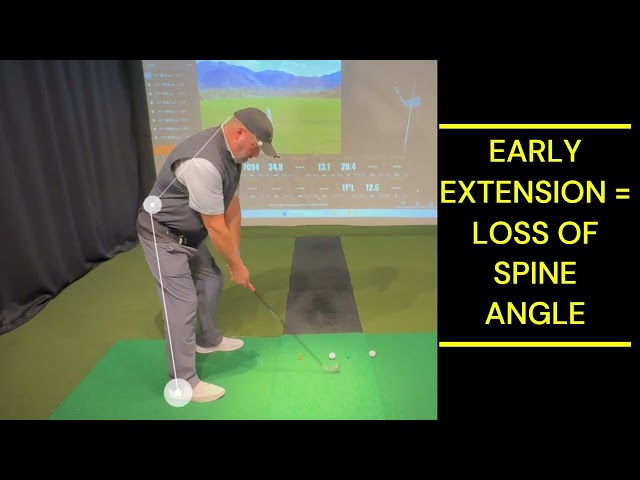
Cause:Most common reason is early extension. When you stand up during the downswing your club will naturally want to push out to the right. This can happen when you start with a Steep Spine Angle, which causes you to compensate by standing up during the downswing. This can also cause you to turn with excessive tilt of your shoulder turn angle during the backswing resulting in a club that travels from inside to out.
Correction:Use SpineAlign to establish proper Spine Angle and refine your shoulder turn. Don’t forget to constantly return to practicing lower body mechanics when in doubt. The system trains the correct shoulder turn angles at both the backswing and impact positions. Avoid focusing on shoulder turn until your lower body movement feels natural and stable. When these angles are properly synchronized, your club path will naturally align. No complicated drills required.
Cause:This can be caused by something as simple as improper alignment. Many golfers believe that they are set up correctly, only to discover they are aimed half a fairway off the intended line. Always check your alignment by placing a club on the ground along your intended line of flight, then step back from the ball. View the club from behind and observe how you have set yourself up. You may be surprised by what you see.
Correction:Adjust your setup to ensure your body and clubface are aligned with your target line. Proper alignment is the first and most essential step to building a consistent golf swing.
Conclusion
Most golfers chase fixes that address symptoms — not causes.
Pushes are a result of incorrect body angles that disrupt balance, sequencing, and rotation.
The SpineAlign App and training accessories remove the guesswork by helping you learn and feel the correct CRITICAL ANGLES: hip, spine, and shoulder movements that make every other part of your swing fall into place. The sequence of movements in the golf swing is one of the most critical factors in achieving consistent, powerful, and efficient results. A proper swing depends on a synchronized chain of motion between the upper body, lower body, and arms. When any part of this sequence occurs out of order, it can lead to poor contact, reduced power, and inconsistent ball flight.
Maintaining the correct spine angle, combined with balanced hip and shoulder rotation, enables the body to move in proper sequence. Executing these motions with the right order, rotation, and timing produces an efficient, repeatable swing that maximizes both control and distance.
The SpineAlign Training System helps golfers master this sequence by reinforcing correct posture, spine angle, and rotational mechanics. With real-time feedback and structured training, SpineAlign improves body awareness and builds the precise movements needed to maintain proper sequencing throughout the entire swing.
Train smarter, not harder. Let SpineAlign correct your critical angles so you can focus on what matters most: a consistent, powerful, repeatable swing.
Pull (straight left)
Common Swing Fault: THE PULL
Description:
A golf pull occurs when the clubface and/or club shaft is closed relative to the swing path at impact, causing the ball to travel to the left for a right-handed golfer. This is the opposite of a push, which travels to the right.
All of the fixes below are taught in our Golf Academy. SpineAlign focuses on teaching the Critical Angles that define a consistent and powerful golf swing:
Spine Angle — based on the club being used
Lower Body Mechanics — emphasizing proper hip turn angles
Shoulder Turn Angle — at the top of the backswing
Shoulder Impact Angle — through contact
These are the foundational principles of a sound golf swing—essential concepts that are rarely taught, yet vital for mastering proper mechanics and improving performance.
Main Causes and Corrections
Cause:Bad alignment. When the ball is positioned too far left of center with your irons, your hands tend to overextend and flip through impact, often resulting in a hook and sometimes a pull.
Correction:Align your ball position according to the club you’re using. For drivers, the ball should be near your front big toe, then move it about one inch toward the middle for each shorter club. Wedges should be positioned around the center or no more than one inch to the right of center. Avoid placing the ball more than an inch right of middle with high-lofted wedges. You’ll achieve greater consistency when the ball is positioned near the center, as that aligns with the bottom of your natural swing arc.
Cause:Shoulders or feet that are aimed too far to the left of the target encourage out-to-in swing paths.
Correction:Proper Alignment! Stop trying drills that direct you to change your foot positions, alignment, stance, or swing plane. Use 2 alignment sticks: one parallel to your toes line and one parallel to your ball flight direction.
Cause:Hands turned too far to the right, forcing the clubface closed at impact.
Correction:Use a grip training aid to learn proper placement and maintain a square face through impact. Do not fabricate a new grip.
Cause:Allowing too much wrist release or trying to manipulate your hand/wrist movement to make up for other swing faults. Overly aggressive wrist rotation, or “flipping” the hands, through impact can cause the clubface to shut down too early. Conversely, a lack of extension or “cupping” in the left wrist can also close the clubface.
Correction:Hold the club with relaxed firm pressure. Allow natural wrist hinge and release — don’t force the motion with your hands. It happens naturally. Do NOT cup your left hand to the outside of your forearm. Work on the CRITICAL ANGLES before training your hand movement. On a 1-10 Scale, hold the club with a pressure of 3-4.
Cause:Insufficient hip and lower-body rotation leading to flipping of the wrists/hands to try and save the shot.
Correction:Use the SpineAlign App with the hip belt to train proper rotation. True rotation begins with the lower body. Stop working on your takeaways, swing plane, and hand mechanics. Focus on lower body and learn to turn hips and legs correctly!
Cause:A steep swing, often resulting from an outside takeaway, can force you to manipulate the club with your hands and close the clubface at impact. This is often caused by an Upright Spine Angle at address.
Correction:Stop trying to fix your swing plane or manipulate your takeaway. The SpineAlign system trains proper posture, correct Spine Angle, athletic hip and leg movement, and optimal shoulder rotation. When these elements are properly aligned, your club path naturally falls into place. No complicated drills required.
Cause:Improper lower-body sequencing, placing too much weight on your left side, and swaying due to flat hip turn. This leads to a Reverse C which can cause you to take your club too steep during the backswing, thereby bringing it down on an out to in path.
Correction:Use the SpineAlign App and hip belt with the “windmill” drill to master weight transfer and balance for your lower body practice.
Cause:A tilt of the upper body to the left during backswing. This is normally a result of poor lower body mechanics. Sometimes it happens because of trying to keep the head steady and stay “connected” to the ball. There is usually too much weight being placed on the Left Side. Also know as Reverse C, it can cause you to take the club back on a steep plane resulting in an out-to-in swing path. It can also cause excess Shoulder Turn Angle (steep shoulder turn) at end of backswing leading to casting of the club from outside to in.
Correction:Use SpineAlign with the hip belt to train proper rotation, leg movement, and hip turn angle. Don’t begin adjusting your upper body mechanics until you’ve mastered the fundamentals of hip and leg rotation. Proper leg and hip movement form the foundation of a powerful and consistent golf swing.
Cause:Incorrect setup leads to breakdowns throughout the swing.
Correction:SpineAlign automatically adjusts spine angle and posture based on your club. Good stance, proper Spine Angle, and lower-body movement are the foundation for every swing.
Cause:Poor posture and improper setup. A Steep Spine Angle causes you to stand too far from the ball, disconnecting your arms away from your body. This leads to excessive shoulder turn angle during backswing, if you are NOT compensating by standing up, resulting in a rounded swing that brings the club on an outside to inside path. The result is usually a hook, but pulls are also noted if the clubface is open.
Correction:Maintain the correct Spine Angle for the club you’re using and approach the ball while keeping that angle. SpineAlign helps you establish the ideal distance from the ball. This begins a more natural swing where your arms stay relaxed but connected to the body allowing them to move straight back and through. This proper setup improves contact, accuracy, and consistency…leading to a more efficient and repeatable swing.
Cause:Rushing disrupts rhythm and timing.
Correction:Use a simple tempo count — say “1 and 2” during your swing. “1” is takeaway, “and” is transition, “2” is impact. If you reach the top before “and,” your tempo is too quick. When training, you can also count 1,2,3 during backswing and same during downswing as a slower tempo will help engrain all the drills we provide in our Academy.
Common Misconceptions
Over-adjusting aim to compensate for a hook ruins consistency and can lead to numerous other bad habits. The only alignment to check is ball position: make sure it’s not too far forward in your stance for irons.
Use a grip training aid to learn a proper grip. Don’t start excessive hand movement during the takeaway. Maintain a slightly closed face during takeaway that leads to a square face at impact. Light grip pressure helps encourage natural hand movement and release. Do not hinge or cup your hands toward your biceps. Focus on extending your right wrist back like a pickleball racquet towards the outside of your forearm. Remember: light grip pressure (3-4 on a 10 scale) helps encourage natural release. This happens when you have proper lower body movement, ideal spine angle, and correct shoulder turn angles.
The best advice is rarely taught correctly. Real posture correction means mastering the angles of your spine, shoulders, and hips. SpineAlign ensures these positions are set and maintained through your entire swing.
Moving your trail (right) leg forward can minimize a hook or pull temporarily, but it can cause problems with leg mechanics and upper-body rotation. It will then lead to a slice. Work with SpineAlign to align your hips, spine, and shoulders correctly.
Forcing fades may help you feel a square face but won’t fix the cause. Focus on a proper grip and rebuilding correct hip, spine, and shoulder angles.
Exaggerating any path changes without addressing your body angles is like putting a bandage on a serious wound. It will usually create other problems.
Turning your hands to the left may square the face temporarily, but it doesn’t fix underlying mechanics. It may cause you to start slicing the ball. Use SpineAlign to retrain your critical angles instead. Use a grip trainer every time you second guess your grip.
Classic advice that only works if your critical angles are correct. When your posture and hip mechanics are wrong, you’ll force compensations everywhere else. With proper angles, the club naturally finds the slot on its own. Fabricating or trying to drop the club in the slot may work for pros but that takes a lot of practice.
Conclusion
Most golfers chase fixes that address symptoms — not causes.
Pulls are a result of incorrect body angles that disrupt balance, sequencing, and rotation.
The SpineAlign App and training accessories remove the guesswork by helping you learn and feel the correct CRITICAL ANGLES: hip, spine, and shoulder movements that make every other part of your swing fall into place.
The sequence of movements in the golf swing is one of the most critical factors in achieving consistent, powerful, and efficient results. A proper swing depends on a synchronized chain of motion between the upper body, lower body, and arms. When any part of this sequence occurs out of order, it can lead to poor contact, reduced power, and inconsistent ball flight.
Maintaining the correct spine angle, combined with balanced hip and shoulder rotation, enables the body to move in proper sequence. Executing these motions with the right order, rotation, and timing produces an efficient, repeatable swing that maximizes both control and distance.
The SpineAlign Training System helps golfers master this sequence by reinforcing correct posture, spine angle, and rotational mechanics. With real-time feedback and structured training, SpineAlign improves body awareness and builds the precise movements needed to maintain proper sequencing throughout the entire swing.
Train smarter, not harder. Let SpineAlign correct your critical angles so you can focus on what matters most: a consistent, powerful, repeatable swing.
Shank
Description:
A shank is one of the most dreaded shots in golf. It’s when you hit the club with the hosel (the heel) and ball goes to the right. It is basically a very bad push and one of the most frustrating swing faults. A shank is not a slice. The ball hits close to where the shaft meets the clubface at the heel while the toe hits the ground first.
Main Causes and Corrections
Cause:This happens when your lower body mechanics are off and you are swaying instead of turning. It can also happen when you try to hold on to the lag during impact.
Correction:Work on lower body using the windmill drill.
Cause:If your right leg is not parallel to your left leg and your line of flight, you will push the ball and sometimes you may shank it.
Correction:Check your alignment and make sure stance is not open.
Cause:Your clubface travels outside the ball. This is normally due to an upright spine angle which sets your body too close to the ball. This will make you swing outside the ball as you naturally try to compensate…the arms have to swing comfortably at the correct distance from the body.
Correction:Use SpineAlign to make sure you are at correct spine angle and distance from the ball. Let arms hang naturally at your side (do not force them out or in.) Use foot powder on clubface to see where ball hits. Place aligner stick or a club cover outside ball to train your path.
Cause:Starting in a Steep Spine angle which causes you to compensate during the downswing by standing up (overextending.)
Correction:Use the SpineAlign App to always start and maintain a correct Spine Angle.
Cause:This can result in a Reverse C which leads to different scooped shots and errors.
Correction:Always return to lower body practice when in doubt. Keep weight even on your feet. Distribute 60% of your weight to your right side during backswing. Practice the windmill drill.
Correction:Grip pressure should always be light: 3-4 on a 10 scale.
Common Misconceptions
Always use a grip trainer before you decide to make changes to the grip
Don’t do this without addressing Spine Angle, which is the real reason for shank
This should only be done for high irons and wedges. It won’t solve the real issue
These errors result in pushes, slices, or hooks but can add to a shank
While this can help it won’t solve the underlying problem
Conclusion
Most golfers chase fixes that address symptoms — not causes.
Pulls are a result of incorrect body angles that disrupt balance, sequencing, and rotation.
The SpineAlign App and training accessories remove the guesswork by helping you learn and feel the correct CRITICAL ANGLES: hip, spine, and shoulder movements that make every other part of your swing fall into place.
The sequence of movements in the golf swing is one of the most critical factors in achieving consistent, powerful, and efficient results. A proper swing depends on a synchronized chain of motion between the upper body, lower body, and arms. When any part of this sequence occurs out of order, it can lead to poor contact, reduced power, and inconsistent ball flight.
Maintaining the correct spine angle, combined with balanced hip and shoulder rotation, enables the body to move in proper sequence. Executing these motions with the right order,rotation, and timing produces an efficient, repeatable swing that maximizes both control and distance.
The SpineAlign Training System helps golfers master this sequence by reinforcing correct posture, spine angle, and rotational mechanics. With real-time feedback and structured training, SpineAlign improves body awareness and builds the precise movements needed to maintain proper sequencing throughout the entire swing.
Train smarter, not harder. Let SpineAlign correct your critical angles so you can focus on what matters most: a consistent, powerful, repeatable swing.
Casting / Early Release
Description: Casting andearly release are often described to be essentially the same problem:when you flip orunhinge your wrists too soon in the downswing. This causes the clubhead to move more than desired leading to weak and inconsistent shots. It can cause slices most often, but it can also lead to pulls and hooks. This premature release wastes energy, reduces clubhead speed, creates topped shots, leads to fat shots, and makes solid contact difficult.
All of the fixes below are taught in our Golf Academy. SpineAlign focuses on teaching the CRITICAL ANGLESthat define a consistent and powerful golf swing:
Spine Angle — based on the club being used
Lower Body Mechanics — emphasizing proper hip turn angles
Shoulder Turn Angle — at the top of the backswing
Shoulder Impact Angle — through contact
These are the foundational principles of a sound golf swing—essential concepts that are rarely taught, yet vital for mastering proper mechanics and improving performance.
Main Causes and Corrections
Cause:Allowing too much wrist release or trying to manipulate your hand/wrist movement to make up for other swing faults. Overly aggressive wrist rotation, or “flipping” the hands, through impact can cause “flipped” impact.
Correction:Always work on the critical body angles before training your hand movement. When holding the club allow natural wrist hinge and release, don’t force the motion with your hands. It happens naturally. On a 1-10 Scale, hold the club with a pressure of 3-4. Most importantly, return to Basic Training: legs, hips, spine angle, and shoulder turn angle.
Cause:Insufficient hip and lower-body rotation. Swaying or Reverse C leads to improper backswing which causes most golfers to compensate by flipping hands. Lack of lower body movement also causes you to create excessive hand and arm motion which leads to over-active hands. Casting is seen when the club is taken too far to the outside, which then causes an out–to–in downswing. This can lead to more hand and arm compensation when you try to return the club towards target. This usually happens when you start with an Upright Spine Angle.
Correction:Use the SpineAlign with the hip belt to train proper rotation, leg movement, and hip turn angle. Don’t begin adjusting your upper body mechanics until you’ve mastered the fundamentals of hip and leg rotation. Stop working on your takeaways, swing plane, and hand mechanics. Focus on lower body first! Proper leg and hip movement form the foundation of a powerful and consistent golf swing. Continue practice by mastering the Shoulder Turn Angle at backswing and learn to keep your elbows tucked into your torso during the first half of the backswing. You can let them come out at the top of the backswing but only if you are able to bring them back to your torso during the downswing.
Cause:Failing to shift your weight forward from your right leg to the left leg during the downswing. Critical angles are out of sequence. Usually another lower body movement problem.
Correction:Begin by setting the correct spine angle for the club you’re using and practice lower body mechanics while maintaining that angle. Focus your practice on staying in spine angle throughout the motion. Allow your legs and hips to move freely without restriction. Once this feels natural, progress to achieving proper shoulder turn angle at backswing. Finally, learn to drive down powerfully to impact, achieving at least a 40-degree shoulder angle. Get your right knee to bend towards the ball during downswing while lowering the right shoulder down instead of keeping your weight on your right foot. As the right knee flexes towards the ball the weight clears off the right leg and you will avoid leaning. Practice the windmill exercise.
Note:Drivers require an upward strike, which often leads golfers to mistakenly stay back on their right side. This causes a loss of distance and an excessively high ball flight. The upward motion of a proper driver swing comes from positioning the ball near the left big toe and allowing the clubhead to contact the ball after the low point of the swing arc…not from leaning back on the right side.
Cause:Incorrect setup leads to breakdowns throughout the swing.
Correction:SpineAlign automatically adjusts spine angle and posture based on your club. Good stance, proper spine angle, and lower-body movement are the foundation for every swing.
Cause:Rushing disrupts rhythm and timing causing hands to flip and sequencing to suffer.
Correction:During a full swing use a simple tempo count — say “1 and 2” during your swing. “1” is takeaway, “and” is transition, “2” is impact. If you reach the top before “and,” your tempo is too quick. When training use a “1.2.3” count during backswing and same during downswing to slow down your practice tempo and engrain your swing mechanics.
Common Misconceptions
This advice is fine but only after your core angles are correct.
Fix spine, hip, and shoulder positions first; hand and wrist motion will then fall into place naturally.
Swing correction starts by establishing the proper Spine Angle, then refining lower body movement and shoulder turn mechanics. Although hand movement is often emphasized in instruction, it should be developed later in training. When your angles are correct, the hands will naturally fall into place. Focus on rebuilding proper hip, spine, and shoulder angles first.
Use a grip training aid to learn a proper grip. Don’t start excessive hand movement during the takeaway. Maintain a slightly closed face during takeaway that leads to a square face at impact. Light grip pressure helps encourage natural hand movement and release. Do not hinge or cup your hands toward your biceps. Focus on extending your right wrist back like a pickleball racquet towards the outside of your forearm. Remember: light grip pressure (3-4 on a 10 scale) helps encourage natural release. This happens when you have proper lower body movement, ideal spine angle, and correct shoulder turn angles.
The best advice — but rarely taught correctly.
Real posture correction means mastering the angles of your spine, shoulders, and hips. SpineAlign ensures these positions are set and maintained through your entire swing.
Exaggerating an inside-out path can mask the problem. It won’t fix it.
Changing your swing path without addressing your body angles is like putting a bandage on a serious wound.
Turning your hands to the right may make you feel like you can’t flip as easily but it does not fix underlying mechanics. It may cause you to start drawing or hooking the ball.
Strong grips are for shaping draws, not repairing bad movement. Use SpineAlign to retrain your critical angles instead.
Conclusion
Most golfers chase fixes that address symptoms — not causes.
High Flight Shots are a result of incorrect body angles that disrupt balance, sequencing, and rotation.
The SpineAlign App and training accessories remove the guesswork by helping you learn and feel the correct CRITICAL ANGLES: hip, spine, and shoulder movements that make every other part of your swing fall into place.
The sequence of movements in the golf swing is one of the most critical factors in achieving consistent, powerful, and efficient results. A proper swing depends on a synchronized chain of motion between the upper body, lower body, and arms. When any part of this sequence occurs out of order, it can lead to poor contact, reduced power, and inconsistent ball flight.
Maintaining the correct spine angle, combined with balanced hip and shoulder rotation, enables the body to move in proper sequence. Executing these motions with the right order, rotation, and timing produces an efficient, repeatable swing that maximizes both control and distance.
The SpineAlign Training System helps golfers master this sequence by reinforcing correct posture, spine angle, and rotational mechanics. With real-time feedback and structured training, SpineAlign improves body awareness and builds the precise movements needed to maintain proper sequencing throughout the entire swing.
Train smarter, not harder. Let SpineAlign correct your critical angles so you can focus on what matters most: a consistent, powerful, repeatable swing.
Early Extension
Description:
These 2 swing faults are commonly referred to in combination due to cause and effect. “Over the top” (OTT) is a steep downswing path caused by the shoulders/arms traveling outside the ideal target line plane. It starts from the top by throwing the hands and shoulders out and down.
Early extension (EE) is seen when the hips thrust towards the ball during the downswing, causing the spine angle to straighten. EE often results as compensation for the OTT move. Both faults typically lead to poor contact, hooks, or slices, but they are interconnected.
An OTT move often causes the body to try and shallow the club by extending forward (EE) and possibly flipping the club. It can cause pushes, slices, or hooks.
All of the fixes below are taught in our Golf Academy. SpineAlign focuses on teaching the CRITICAL ANGLESthat define a consistent and powerful golf swing:
Spine Angle — based on the club being used
Lower Body Mechanics — emphasizing proper hip turn angles
Shoulder Turn Angle — at the top of the backswing
Shoulder Impact Angle — through contact
These are the foundational principles of a sound golf swing—essential concepts that are rarely taught, yet vital for mastering proper mechanics and improving performance.
Main Causes and Corrections
Cause:Insufficient arm depth in the backswing, leading to a steep, upright club position that can’t swing down on plane.
Correction:Improve Backswing Depth: Keep left arm straight and get more arm depth at the end of the backswing.
Cause:lower body mechanics, particularly failing to properly rotate the hips and legs during the downswing. This can cause the upper body to dominate the swing resulting in a loss of power and distance by forcing you to use incorrect hand and arm movement. Insufficient hip and lower-body rotation. Swaying (lateral shift) or Reverse C leads to improper backswing which causes most golfers to compensate by changing swing planes and flipping hands. Casting and OTT are seen when the club is taken too far to the outside, which then causes an out-to-in downswing. This can lead to more hand and arm compensation when you try to return the club toward the target.
Correction:An ideal golf swing starts with the lower body. It does not start with upper body rotation. Use the SpineAlign with the “windmill exercise” and the hip belt to train proper rotation, leg movement, and hip turn angle. Don’t begin adjusting your upper body mechanics until you’ve mastered the fundamentals of hip and leg rotation. Stop working on your takeaways, swing plane, and hand mechanics. Focus on lower body first! Proper leg and hip movement form the foundation of a powerful and consistent golf swing. Continue practicing by mastering the Shoulder Turn Angle at backswing and learn to keep your elbows tucked into your torso during the first half of the backswing. You can let them come out at the top of the backswing but only if you are able to bring them back to your torso during the downswing.
Cause:Failing to shift your weight forward from your right leg to the left leg during the downswing while dropping the right hip down. Critical angles are out of sequence. Usually another lower body movement problem.
Correction:Begin by setting the correct spine angle for the club you’re using and practice lower body mechanics while maintaining that angle. Focus your practice on staying in spine angle throughout the motion. Allow your legs and hips to move freely without restriction. Once this feels natural, progress to achieving proper shoulder turn angle at backswing. Finally, learn to drive down powerfully to impact, achieving at least a 40-degree shoulder angle. Get your right knee to bend towards the ball during downswing while lowering the right shoulder down instead of keeping your weight on your right foot. As the right knee flexes towards the ball the weight clears off the right leg and you will avoid leaning. Practice the windmill exercise.
Note:Drivers require an upward strike, which often leads golfers to mistakenly stay back on their right side. This causes a loss of distance and an excessively high ball flight. The upward motion of a proper driver swing comes from positioning the ball near the left big toe and allowing the clubhead to contact the ball after the low point of the swing arc…not from leaning back on the right side.
Common Misconceptions
The best advice — but rarely taught correctly.
Real posture correction means mastering the angles of your spine, shoulders, and hips. SpineAlign ensures these positions are set and maintained through your entire swing.
Exaggerating an inside-out path can mask the problem. It won’t fix it.
Changing your swing path without addressing your lower body movement and body angles is like putting a bandage on a serious wound.
Conclusion
Most golfers chase fixes that address symptoms — not causes.
OTT and EE are a result of incorrect body angles that disrupt balance, sequencing, and rotation.
The SpineAlign App and training accessories remove the guesswork by helping you learn and feel the correct CRITICAL ANGLES: hip, spine, and shoulder movements that make every other part of your swing fall into place.
The sequence of movements in the golf swing is one of the most critical factors in achieving consistent, powerful, and efficient results. A proper swing depends on a synchronized chain of motion between the upper body, lower body, and arms. When any part of this sequence occurs out of order, it can lead to poor contact, reduced power, and inconsistent ball flight.
Maintaining the correct spine angle, combined with balanced hip and shoulder rotation, enables the body to move in proper sequence. Executing these motions with the right order, rotation, and timing produces an efficient, repeatable swing that maximizes both control and distance.
The SpineAlign Training System helps golfers master this sequence by reinforcing correct posture, spine angle, and rotational mechanics. With real-time feedback and structured training, SpineAlign improves body awareness and builds the precise movements needed to maintain proper sequencing throughout the entire swing.
Train smarter, not harder. Let SpineAlign correct your critical angles so you can focus on what matters most: a consistent, powerful, repeatable swing.
Great swings do not happen by chance.
They happen when your spine, hips and shoulders move in perfect harmony.
Turn every swing into a lesson. Try SpineAlign free.