

Swing Like You’re Holding a Garden Hose
“Swing Like You’re Holding a Garden Hose” is a tip to promote a relaxed, smooth…
Read More The motion begins with a gentle and connected movement of the arms while maintaining spine angle. This keeps the first part of the takeaway smooth and prevents yanking the club back with the wrists or shoulders. Upper arms stay connected to the body and become dependent on lower body and shoulder turn mechanics. First: practice quarter to half turn with the chest vest and SpineAlign App to learn how to keep your spine angle stable while feeling the arm connection. Master this before beginning the second half of the backswing.
Once you've mastered the first half of the takeaway, continue the backswing by allowing your lead knee (left knee for a right-handed golfer) to gradually move toward the center of your stance. As this happens, your shoulders begin turning the upper body while your arms remain connected to your torso. This coordinated movement allows your hips to rotate naturally to a minimum of 17 degrees without swaying laterally. Throughout the backswing, your trail (right) knee maintains a stable amount of flex, providing balance and support. As your lower body, shoulders, arms, and hands move together in sequence, you'll create a centered, powerful backswing that sets up a consistent and efficient downswing. Keep relaxed grip pressure on the club and your hands/wrists will naturally move the club up to the sky.
During the second half of the backswing, the arms, shoulders, and hips must work together in sync to complete the SpineAlign Swing Fundamental Principle. Using a 7-iron as an example, the ideal relationship is: 40° Spine Angle 30° Shoulder Turn Angle 20° Hip Turn Angle This is the 40:30:20 SpineAlign Swing Fundamental Principle. With a driver, the ideal relationship becomes 30:30:20, reflecting the more upright spine angle at address. Achieving these angles at the top of the backswing places your body in a strong, balanced position, creating the foundation for a powerful, repeatable downswing.
Once you've established a stable backswing and achieved the correct SpineAlign angles, you're ready to begin the downswing with the lower body initiating the movement. Rotate your toward a 20-degree open position at impact by bending the right knee down towards the ball. This allows your shoulders to rotate down beyond 40 degrees, generating the compression and speed needed for powerful, solid contact. As the hips and right knee lead...the shoulders follow and the body stays in sequence. This controlled movement helps prevent early extension, reduces over-the-top swings, and allows the club to naturally approach the ball from a strong inside path. Never start downswing with arms and hands.
Arms Deliver the Club Through Impact
Keep It Simple
Practice Slow Motion Reps
Match the Sequence to Your Personal Tempo
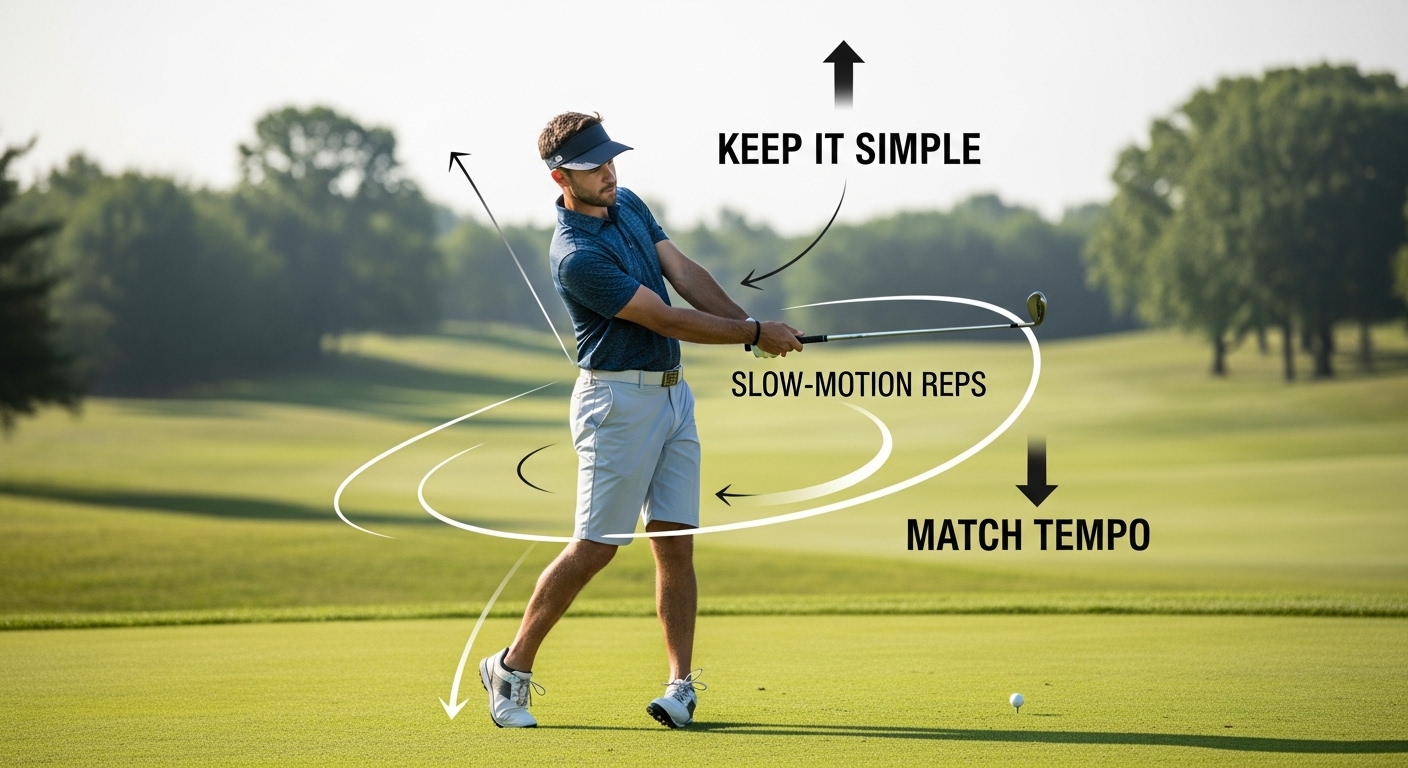
Improves Timing and Rhythm
Many players either rotate too much too early or not enough at all. Arms Shoulders Hips Shoulders Arms creates a natural flow so you avoid jerky or disconnected motion. The lower body is the key to making this sequence work.
When the body moves in the right order the club returns to the ball with better direction and angle of attack which improves accuracy and ball striking. Changing swing planes and hand mechanics is not the answer.
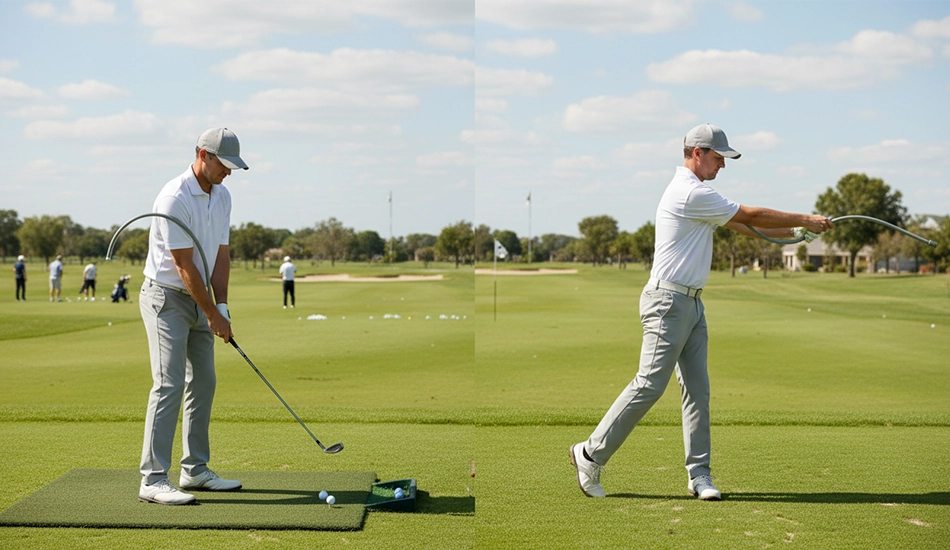 Entire Swing
 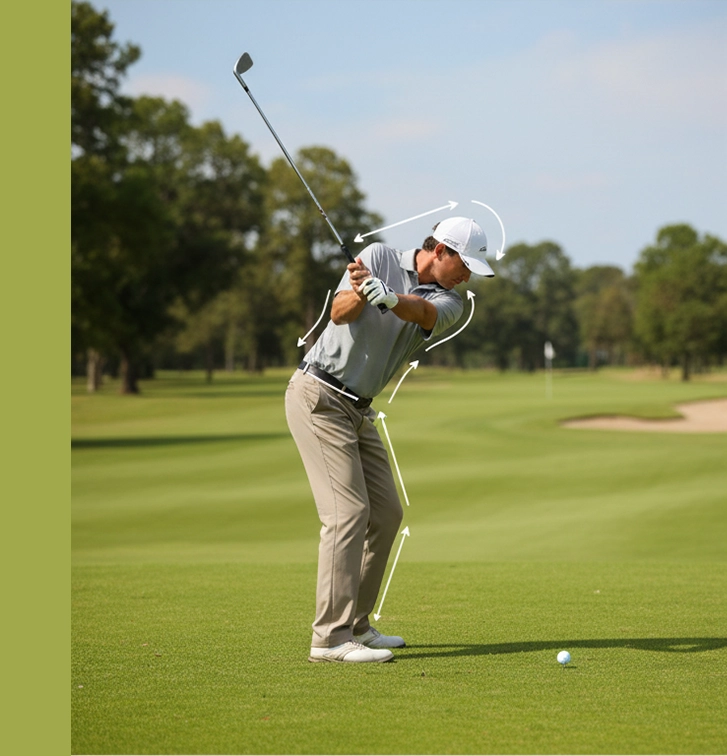 Entire Swing
 Categories
They happen when your spine, hips and shoulders move in perfect harmony.
Turn every swing into a lesson. Try SpineAlign free.