
Beginner Golf Tips
Starting your golf journey can feel overwhelming but with the right foundation you will build…
Read More 
The takeaway sets the rhythm and direction for the rest of the swing. Begin by using the SpineAlign Golf App with the chest vest and practice quarter turns: moving the club back and forth smoothly with your shoulders while maintaining Spine Angle. Allow legs and hips to rotate comfortably in sync with upper body. Keep the clubhead low to the ground and maintain posture. This will help you get set for a solid takeaway by helping you stay on plane and preventing early swing faults. It is very dependent on the lower body mechanics staying in sync.
A proper backswing starts with the proper setup - Spine Angle based on chosen club! After mastering quarter turns, begin to turn your shoulders in sync with legs and hips. Do not create an upper body swing that disconnects from your lower body. Keep your lead arm extended (straight) while your right elbow stays tucked to your right side and your wrists gradually hinge with relaxed grip pressure. Avoid lifting the club too steeply or wrapping it behind your body. Pretend you are creating a Ferris wheel motion, not a baseball or hockey swing.
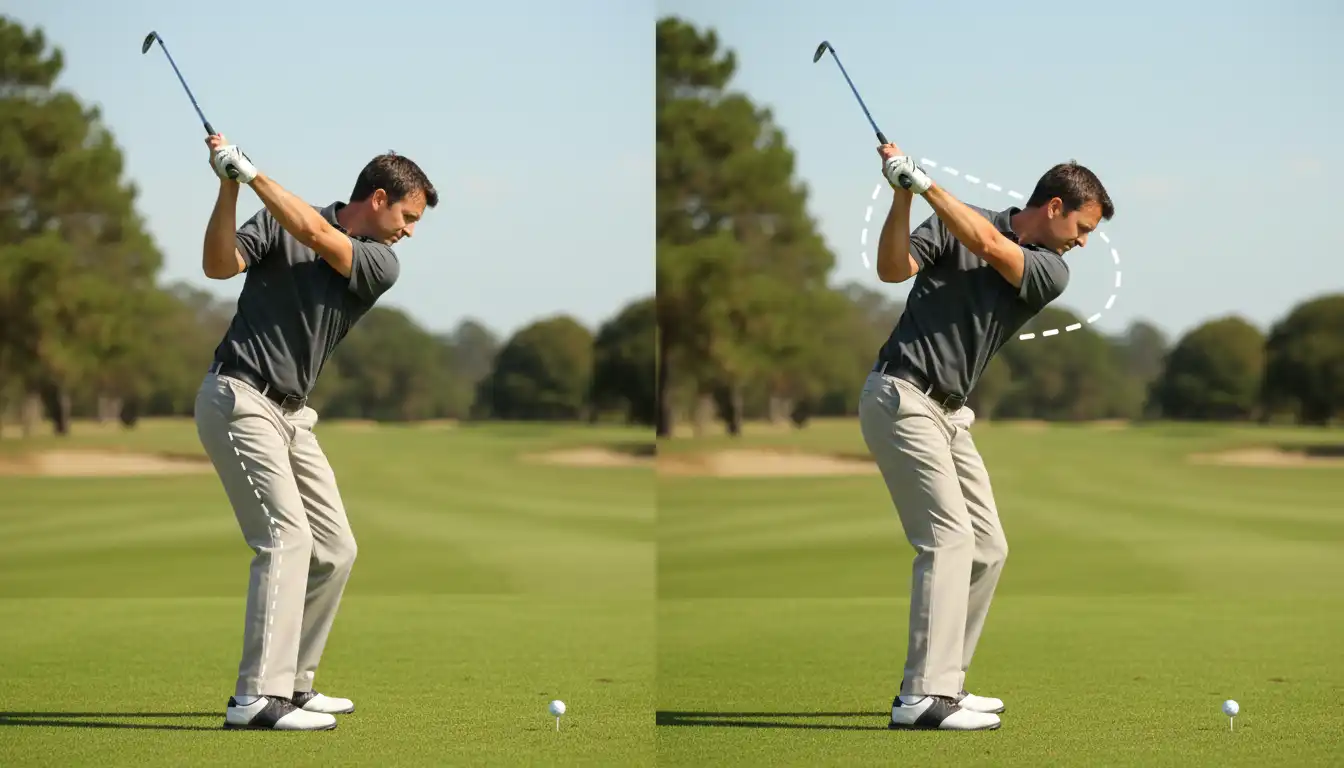
The transition from backswing to downswing is one of the most important movements in golf. If the top of the backswing is correct and your lower body has turned properly, then you are ready to shift your weight toward your lead side while allowing your hips to initiate the downswing. This sequence generates power and keeps the club on a stable path. If in doubt, always return to lower body practice using the App.
During the downswing your body unwinds to deliver the club to the ball. This starts with your lead (left leg) moving back and up towards left side, while right knee collapses towards the ball allowing hips to turn down at a minimum of 17 degrees. Keep your arms in front of your chest and rotate your hips through the shot. Avoid rushing or casting the club with your hands. This happens when your lower body is not turning correctly and your hips rotate too flat. A controlled downswing leads to better ball flight and increased accuracy.
 Golf Tips
  Golf Tips
 Categories
They happen when your spine, hips and shoulders move in perfect harmony.
Turn every swing into a lesson. Try SpineAlign free.