Smarter Golf Starts With Better Motion
Your club path is one of the most important swing elements that controls the direction and movement of your golf shots. At Spine Align Golf we explain club path in a simple way that helps you diagnose your tendencies and improve your ability to hit straighter more predictable shots. Learning how the club travels through impact allows you to reduce unwanted curves and gain more control over your ball flight.
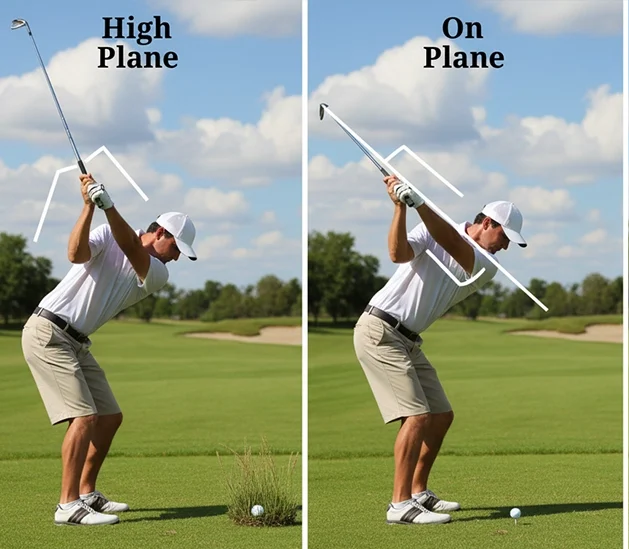
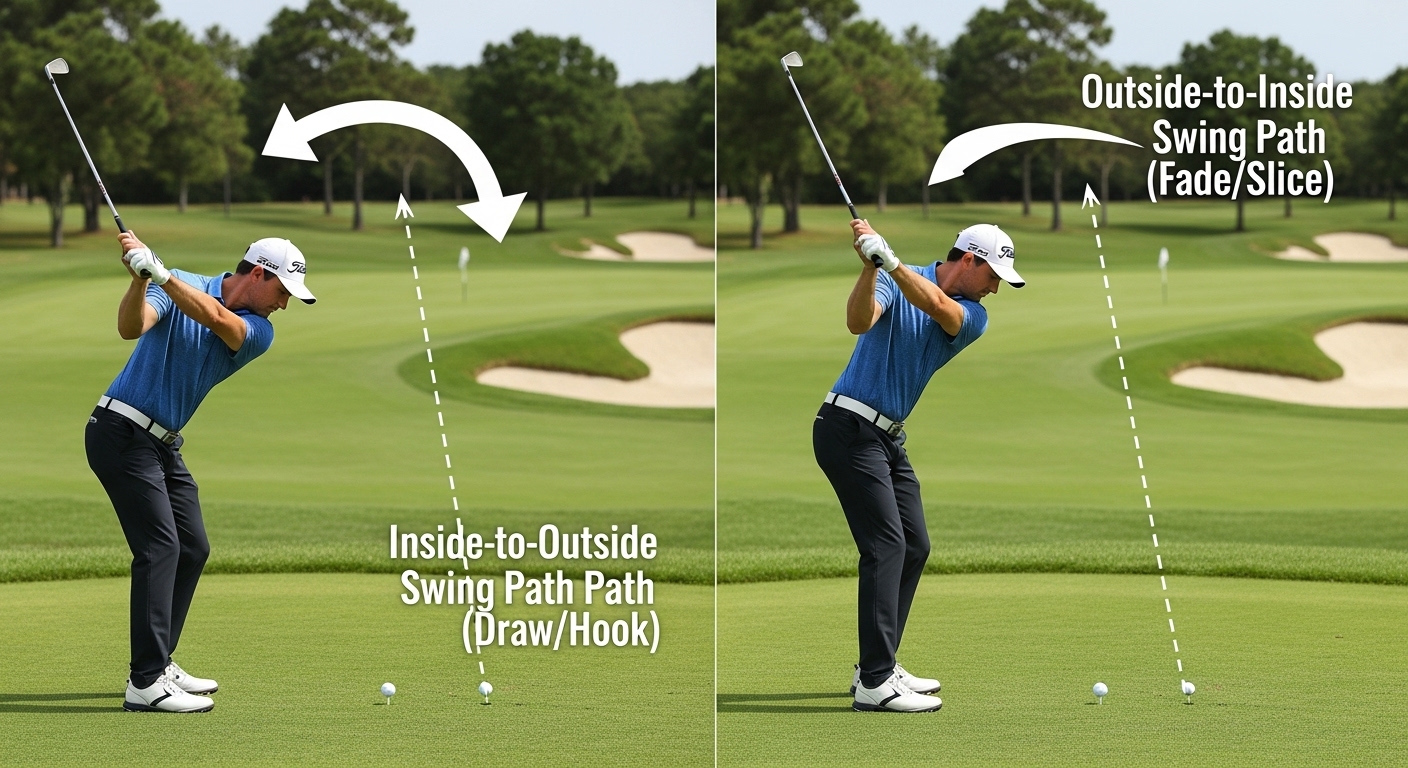
An inside to outside club path happens when the club travels from the inside of the target line and moves outward through impact. Golfers often associate this with a draw shot because it often "creates" a compensation that leads to hands flipping and the clubface closing. It will also result in a push. It is often seen due to starting with a Steep Spine Angle.
This type of path is often used as a Quick Fix for slices. Some instructors teach a backswing that begins inside and travels outside to "feel" a release. We don't recommend such fixes! If you start to practice with Quick Fixes you will create more problems.
An outside to inside club path occurs when the clubhead swings down and across the target line on the way through the ball. This can cause a compensation that leads to opening the clubface which can contribute to left to right spin and results in fade or slice shots. It is commonly seen when a golfer starts with an Upright Spine Angle. It also creates pulls.
A player who pulls shots or struggles with a slice often has a path that is too steep or too much across the ball. Improving body rotation and reducing upper body dominance often helps neutralize this path. That is all part of the Golf Swing Sequence that our Academy teaches.
Club path describes the direction the clubhead is moving at the moment it strikes the ball. It does not refer to the direction the club started in the backswing or the direction the club goes after impact. Club path is measured only in the short window at or just before contact and it has a major influence on your shot shape.
A straight club path moves directly toward the target at impact. This does not mean your swing is perfectly straight the entire time but that the club’s movement aligns with the target as it meets the ball. A straight path paired with a square clubface produces shots that fly without an intentional curve.
Straight paths are harder to achieve consistently than most golfers expect because even small changes in body rotation, grip pressure or arm position can alter the clubhead’s movement at impact.
Understanding and improving your club path gives you control over your ball flight and helps you build a predictable swing. Whether you want straighter shots, more controlled fades or more powerful draws your swing becomes much more reliable when the path is consistent.
Spotting these errors early makes it easier to correct your path and return the club on a more efficient line.
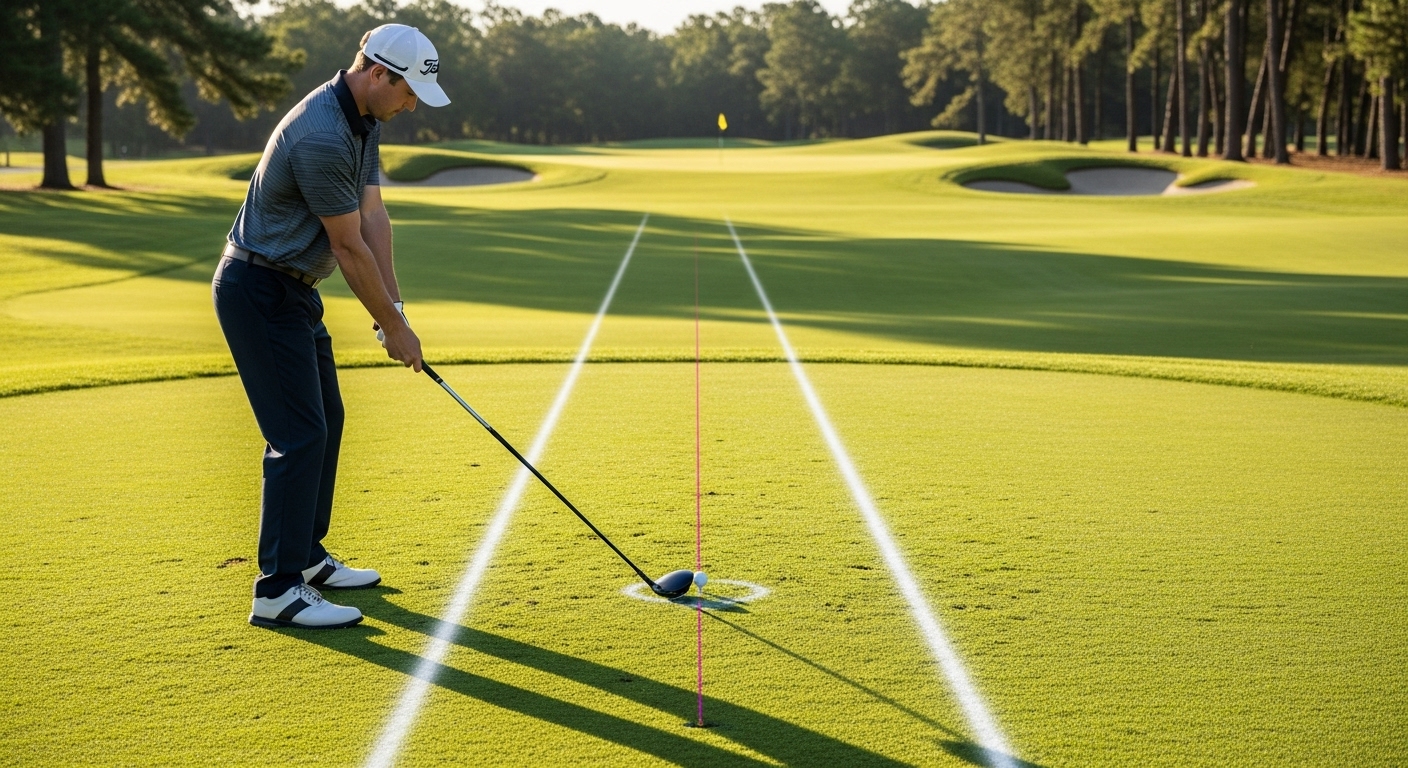
Place one stick along the target line and another slightly inside it. Practice swinging so the club travels along the inside stick before impact.
Make a smooth swing and after striking the ball let your trail foot step forward. This helps encourage proper body rotation and reduces the tendency to swing across the ball.
The Tee Gate Drill
Create a narrow gate with two tees positioned just before impact. Practice swinging through the gate cleanly to help guide your club on a straighter path.
Mastering the club path is one of the fastest ways to improve your accuracy and reduce unwanted curves. With the right understanding and a few simple practice drills you can make meaningful improvements in a short amount of time.
For more swing improvement fundamentals explore another article in the Spine Align Golf Knowledgebase. You can also start downloading the Spine Align App or visit the Golf Academy videos for guided training and personalized support.
Swing
Swing