

Shaft Position at the Top of the Swing
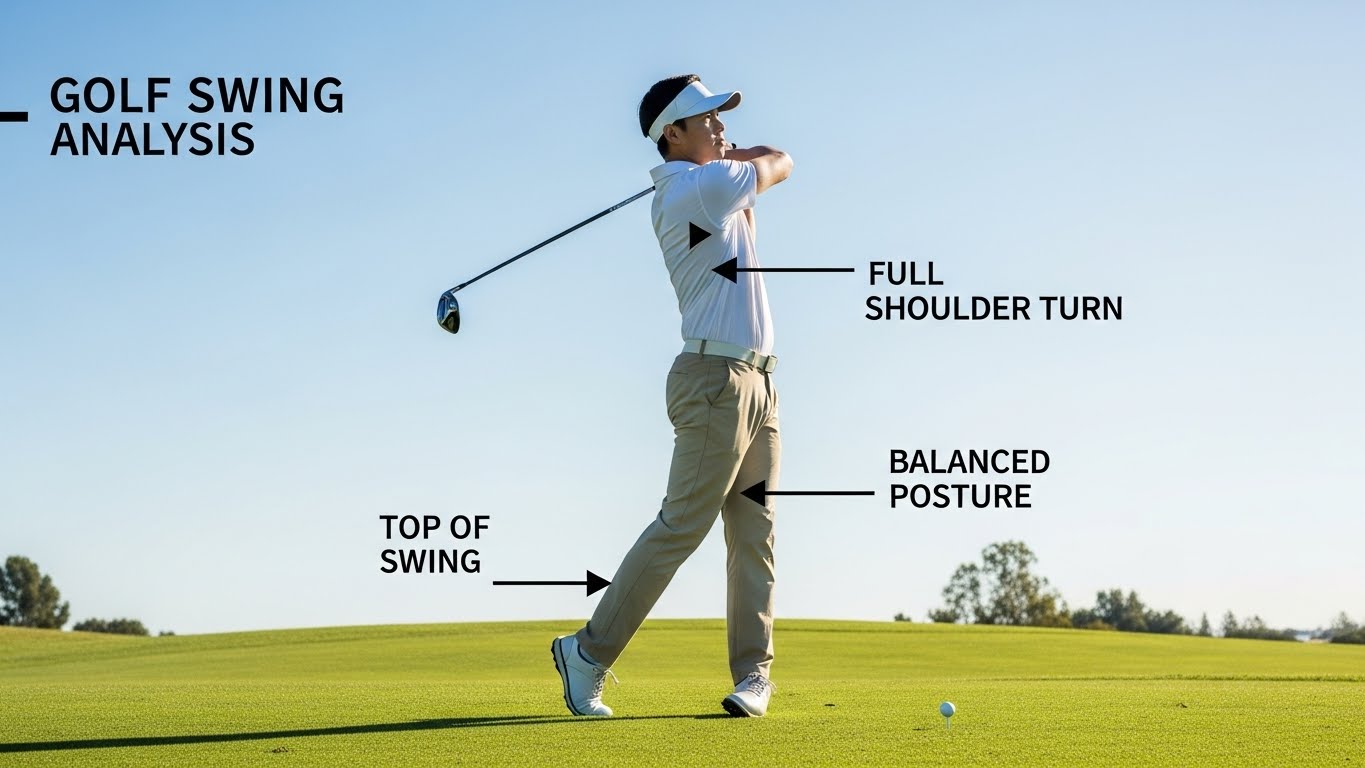
The position of the club shaft at the top of the swing gives you instant feedback on how your Swing Sequence is working. The last motion of your club indicates that you had a well aligned movement into the ball. A poorly positioned one may show you that you need to return to your swing fundamentals as taught in our Academy. At Spine Align Golf we help golfers build a repeatable Golf Swing Sequence that sets the stage for an efficient downswing that finishes on target.

Ideal Shaft Position at the Top
Shaft Pointing Toward the Target
For most golfers the ideal top position has the shaft pointing toward or slightly right of the target line. This shows that you cleared your body properly and allowed good weight transfer through the finish.
Connected Arm Structure
The arms should naturally separate from your body as the clubhead follows the ball. Your left arm folds towards the body while your right arm straightens more.
Balanced Wrist Set
Your wrists should be fully hinged at the top of the backswing to allow lag creation during downswing. They should be fully released at impact and then hinge back up at the finish position. Improper hinging, such as cupping, will lead to a bad club and swing path.
Stable Lower Body
Rigid leg and hip rotation can push the shaft out of position. Maintaining pressure in the trail leg supports a strong top position during the backswing, but weight shift to the left side is important, as you have to "clear" your body towards the ball flight. This requires proper lower body mechanics which ends with your left leg straightening, more while the right leg buckles the knee towards the ball flight line and allows the right leg to lift off the ground after impact.
Why Shaft Position Matters
A good shaft position at the top shows that it was on plane usually because you were able to rotate freely without rerouting the club. If the shaft is too steep, flat, open, or closed you will notice it when your finish position is awkward. This will lead to slices, hooks, or poor contact.
A correct position allows for:
- A natural shallowing motion.
- Effortless rotation into impact.
- Improved clubface control.
- Better timing and rhythm.
Common Shaft Position Errors
Across the Line
When the shaft points too far to the right of the target line it indicates lack of hand release and an inside to outside swing path which results in pushes. It can result from Reverse Pivoting or taking the club too far inside, normally seen when you try to make Quick Fixes to your swing.
Laid Off to the Left
If the shaft points left of the target line, the club has most likely traveled from outside to inside such as can happen when you start with an Upright Spine Angle. It can also indicate that you started with a Steep Spine Angle if you suffered a severe hook shot. Another factor may be that you are flipping and casting the club, which leads to pulls or hooks.
Club Too Steep
A steep top position forces the club down a steep path which can produce fat shots or slices.
Hinging the Wrists Incorrectly
How your wrists hinge can change the angle of the shaft and clubface, leading to many swing errors. Right hand should always fold towards the elbow/outside of the arm, while the left wrist hinges towards the inside of the body without cupping to the outside.
How to Practice Better Shaft Control
Short Backswing Drills
Practice all of the drills in our Golf Academy so that you can learn the proper Golf Swing Sequence. Quick fixes do not work.
Slow Backswing Rehearsals
Move slowly to feel where the shaft sits at the top. Adjust until it aligns with your spine and target line.
Mirror or Smartphone Checks
Use a mirror or live swing feedback tool to confirm your shaft position.
Conclusion
The shaft position at the top/end of the swing is feedback of your swing. By focusing on the ideal Golf Swing Sequence, you will attain a proper finish.
Categories


