Smarter Golf Starts With Better Motion
A solid golf grip is one of the most important fundamentals in building a reliable and repeatable swing. The way your hands connect to the club influences everything from clubface control to swing path and overall shot shape. When your grip is set correctly you give yourself a better chance of striking the ball cleanly and generating consistent power. The grip is often the foundation of every great golfer and small improvements can create major results in your performance.
Most golfers choose one of three common grip styles. Each one offers slightly different benefits and feel. The key is finding the one that lets your hands work together as a single unit.
This is one of the most popular grips among experienced golfers. The pinky finger of your trailing hand rests on top of the gap between your lead hand’s index and middle finger. It promotes smooth hand connection and helps prevent excessive wrist action.
In the interlocking grip the pinky finger of the trailing hand locks with the index finger of the lead hand. This style is common among golfers with smaller hands or players who prefer a more secure connection between the hands.
Ten Finger Grip
Also known as the full finger grip the ten finger option places all fingers directly on the club similar to holding a baseball bat. It allows for powerful leverage and is often easier for beginners who need more stability.
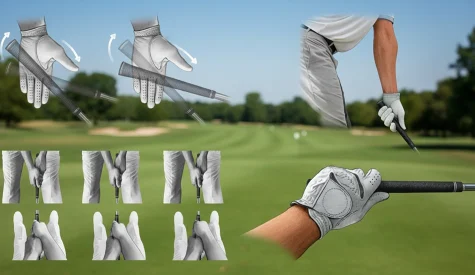
Your lead hand sets the foundation of the entire grip so putting it on correctly is essential.
A correct lead hand position helps control the clubface and prevents unwanted twisting in your backswing.
Once your lead hand is secure, place your trailing hand on the club so the palm faces your target and fits naturally into the lead hand. The lifeline of your trailing palm should sit directly on top of your lead thumb creating a unified connection.
Your trailing hand controls the release of the club and helps provide speed and power through impact. A balanced trailing hand reduces flipping and promotes a smooth natural arc.
Although many golfers are familiar with these terms it is important to understand what they actually influence.
A neutral grip offers the most consistent control. Both hands sit naturally on the club with minimal tension. This position helps square the clubface and keeps ball flight predictable.
A strong grip shows more knuckles on the lead hand and rotates both hands slightly to the trailing side. It can help golfers who struggle with slicing because it encourages the clubface to close more easily through impact.
Weak Grip
A weak grip moves both hands slightly toward the lead side. It is less common but can help golfers who tend to hook the ball.
Your grip determines the orientation of the clubface at impact which is the biggest factor in where the golf ball starts. A grip that is too weak or too strong can cause the clubface to rotate incorrectly through the swing which sends shots off target. A well balanced grip helps create a stable square clubface that leads to straighter and more predictable ball flight. Learning how to hold the club the right way is one of the fastest ways to improve accuracy and swing control.
A tight grip restricts wrist hinge and creates tension throughout the arms and shoulders. This leads to poor rhythm and reduced clubhead speed. A lighter hold allows for smoother and more powerful motion.
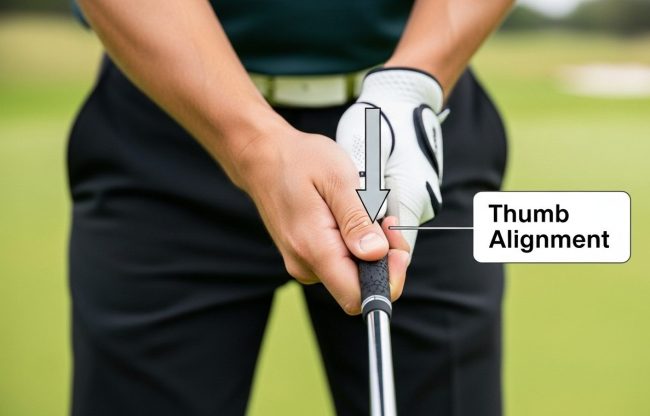
Thumbs that sit off center can cause twisting of the clubface. Make sure both thumbs point down the shaft in a comfortable position that encourages a stable grip.
Separating the Hands
If there is a visible gap between your hands you lose control and consistency. Keep the hands connected so they work together throughout the swing.
Your grip is the foundation of every golf swing and improving it can transform your accuracy, power and overall confidence on the course. With the right hand placement and a consistent routine you can create a grip that supports better ball striking and fewer off line shots. For the next step in your setup journey explore our detailed article on posture and balance.
Setup & Address
Setup & Address