
Smarter Golf Starts With Better Motion

Top of the Swing: How to Hinge Correctly Without Cupping or Bowing

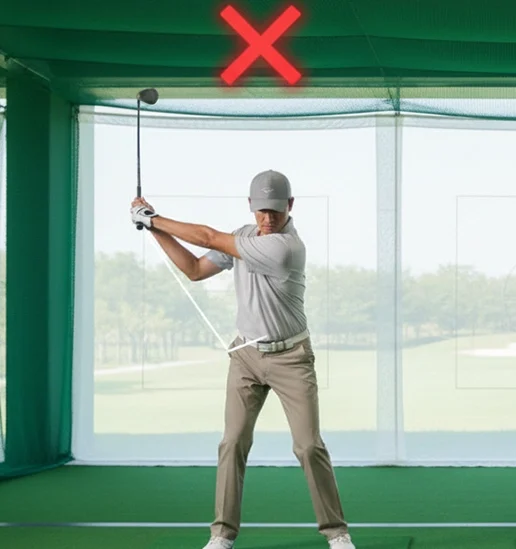
The top of your golf swing is a critical position that sets the stage for a powerful and consistent strike. One of the most common mistakes golfers make is improperly hinging the wrists. Many players either cup or bow their lead wrist which can lead to inconsistent ball flight, loss of power and unnecessary stress on the wrists and elbows. Learning the correct hinge technique can transform your swing and improve your performance.

Understanding the Hinge

The wrist hinge is a natural backward movement of the club as you lift it into the top of the swing. Think of it as creating a triangle between your lead arm and the club shaft. This hinge stores energy that will later release during your downswing. However, when the wrist cups or bows, this energy is misdirected leading to slices, hooks or topped shots.

The Cupped Wrist Problem

A cupped lead wrist occurs when the back of your hand bends upward at the top of the swing. This position often causes the clubface to open too much leading to pushes and slices. It also limits your ability to release the club naturally on the downswing and can put strain on your wrists and forearms.

The Bowed Wrist Problem

Bowing is the opposite of cupping. Here the lead wrist bends downward causing the clubface to close excessively. This leads to hooks and inconsistent contact. Like cupping, bowing reduces your ability to create lag and can lead to tension in the swing.

Quick Drill for Correct Hinge

Place a small ball or object under your lead wrist during practice swings. The goal is to maintain contact without dropping the ball which encourages a flat hinge. This drill helps ingrain the correct wrist position and improves consistency.

How to Hinge Properly

Start with a neutral grip

Ensure your lead hand sits naturally on the club with the lifeline facing the target. Avoid gripping too tightly as this can exaggerate wrist movement.

Create a natural hinge

As you lift the club, allow the wrists to hinge naturally while keeping the lead wrist flat or slightly extended. This forms a solid angle between your lead arm and the club shaft.

Practice slow repetitions

Use slow swings to feel the correct hinge. You can even practice in front of a mirror to see your wrist position and avoid cupping or bowing.

Create a natural hinge

At the top of the swing, the clubface should be slightly tilted but not dramatically open or closed. This alignment helps you return the club squarely to the ball.

Conclusion

Mastering the top of the swing with a proper hinge is essential for consistency and power in golf. Avoiding cupping or bowing your wrists protects your joints and sets you up for better ball striking. For more detailed guidance, check out the Spine Align Golf Knowledgebase or start improving your swing today with the Spine Align App. You can also explore our Golf Academy videos for step by step drills and tips to perfect your wrist hinge and overall swing.

Product added to cart View Cart