Smarter Golf Starts With Better Motion
Knowing how and why the golf ball curves is one of the best ways to improve accuracy and consistency on the course. Ball flight patterns give you valuable feedback about your swing path, face angle and impact conditions. This Spine Align Golf guide breaks down the most common ball flights so you can quickly recognize correct issues and shape the ball with confidence.
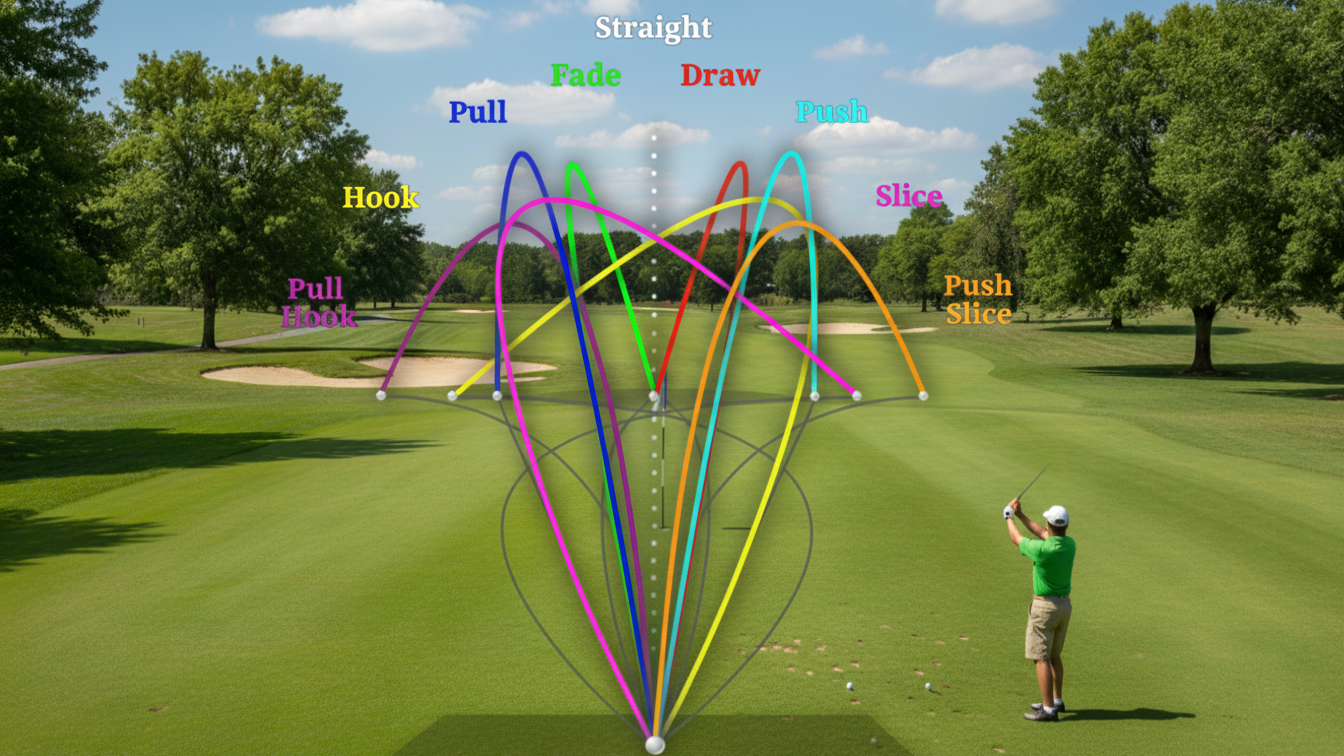
A straight shot occurs when the clubface is square to the swing path at impact and the ball travels directly toward the target with no curve. This shot is the goal for many golfers especially when accuracy is a priority.
A draw starts slightly right of the target for a right handed golfer then curves gently back toward the target. It is considered a desirable shot because it produces strong penetrating ball flight with reliable control. A draw usually requires an inside path with a clubface that is slightly closed to the path but still pointed near the target.
A hook curves sharply from right to left for a right handed golfer and typically ends far left of the intended target. This stronger curve happens when the clubface is closed significantly relative to the swing path. Hooks often result from excessive hand rotation or an overly inside path.
A pull is a straight shot that starts left of the target for a right handed golfer without curving. This usually happens when the clubface is square but the swing path travels left of the target line. Pulls often indicate that the upper body is dominating the downswing too early.
A push hook starts right of the target but curves sharply back left. This unusual pattern comes from a swing path that travels to the right combined with a clubface that is close to that path. When timed incorrectly it produces dramatic leftward movement.
A pull hook begins left of the target and curves even farther left. This is caused by a leftward swing path combined with a clubface that is closed to that path. This flight results in significant directional loss and often signals a combination of path and face issues.
A fade starts slightly left of the target and curves gently back toward it for a right handed golfer. Many golfers rely on a fade for consistent control and accuracy. A fade typically comes from a swing path that is slightly left of target with a clubface that is open to the path but still near the target line.
A slice is a more severe version of a fade with a strong left to right curve that ends well right of the target. Slices occur when the clubface is open relative to an outside swing path. This is one of the most common issues for amateur golfers and often reduces distance and accuracy.
A push starts right of the target for a right handed golfer with little to no curve. This typically happens when the swing path moves from inside to outside but the clubface is square to that path. Pushes usually mean the clubface arrives late or the golfer does not fully rotate through impact.
Push Slice
A push slice begins right of the target and curves even farther right. This flight results from a clubface that is open relative to an inside to outside path. For many golfers this is the most frustrating ball flight because it loses both distance and direction.
Understanding ball flights helps you interpret what your swing is doing at impact and gives you a clear roadmap for improvement. By learning to control your path and face you can eliminate frustrating misses and start shaping shots with purpose. For more detailed guidance explore the next article in the Spine Align Golf knowledgebase or download the Spine Align App to access customized coaching and the full Gold Academy training library.
Golf Terms
Golf Terms