


Smarter Golf Starts With Better Motion

Downswing Guide

The downswing is one of the most powerful transitions in the golf swing and it often separates consistent ball strikers from those who struggle with control. Understanding how to sequence your body and club correctly during this phase leads to cleaner contact, improved accuracy and greater distance. This guide from Spine Align Golf explains how to create a smooth and efficient downswing that supports a strong impact position.

What the Downswing Should Feel Like

The downswing should begin with a sense of controlled movement rather than a rushed lunge toward the ball. Many golfers struggle because they start with their hands or shoulders which causes casting early release loss of power and off line shots. A well sequenced downswing begins from the ground up allowing the body to lead while the arms and club follow naturally.

Start the Downswing With the Lower Body

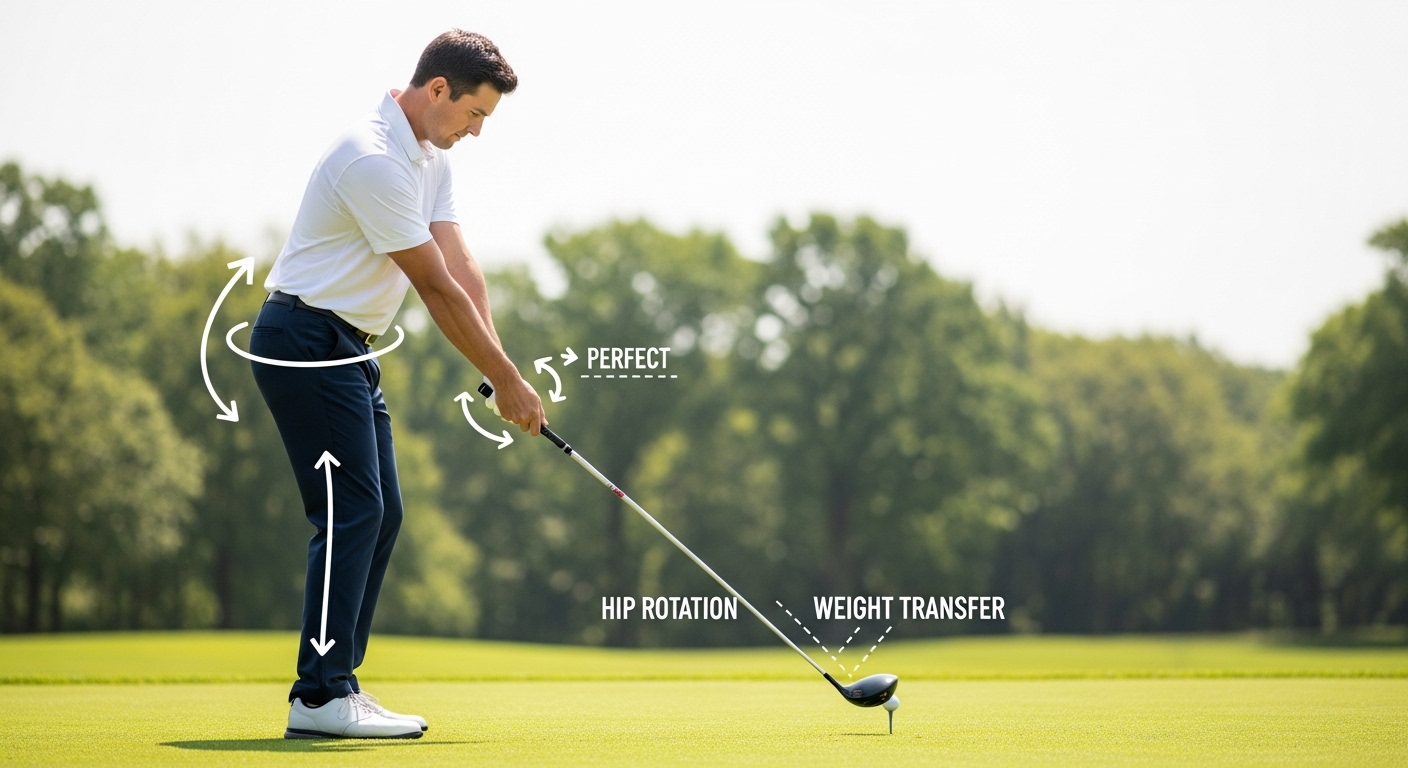
One of the most reliable ways to begin the downswing is by shifting pressure into your lead foot. This engages your legs and hips and helps create the proper sequence for strong impact. As your lower body begins to rotate your upper body stays stable which prevents early throwing of the club.

Key Benefits of Leading With the Lower Body
  • Generates more rotational power.
  • Improves swing path consistency.
  • Helps maintain lag in the club.
  • Encourages cleaner ball contact.
top of backswing downswing begins

Maintain Your Spine Angle

Losing posture is one of the quickest ways to ruin a powerful downswing. Maintaining your spine angle throughout the transition helps the club return to the ball on the intended path. When the spine angle collapses the swing becomes inconsistent leading to fat shots, thin shots or slices.

think about mechanics

Keep Your Hands and Arms Relaxed

Although the downswing requires athletic movement your hands and arms should feel calm and responsive rather than tight. Over gripping the club or forcing the club down with your hands short circuits the role of your legs and core. Keeping your arms relaxed allows the club to move on plane and stay connected to your body rotation.

Downswing

Allow the Club to Shallow Naturally

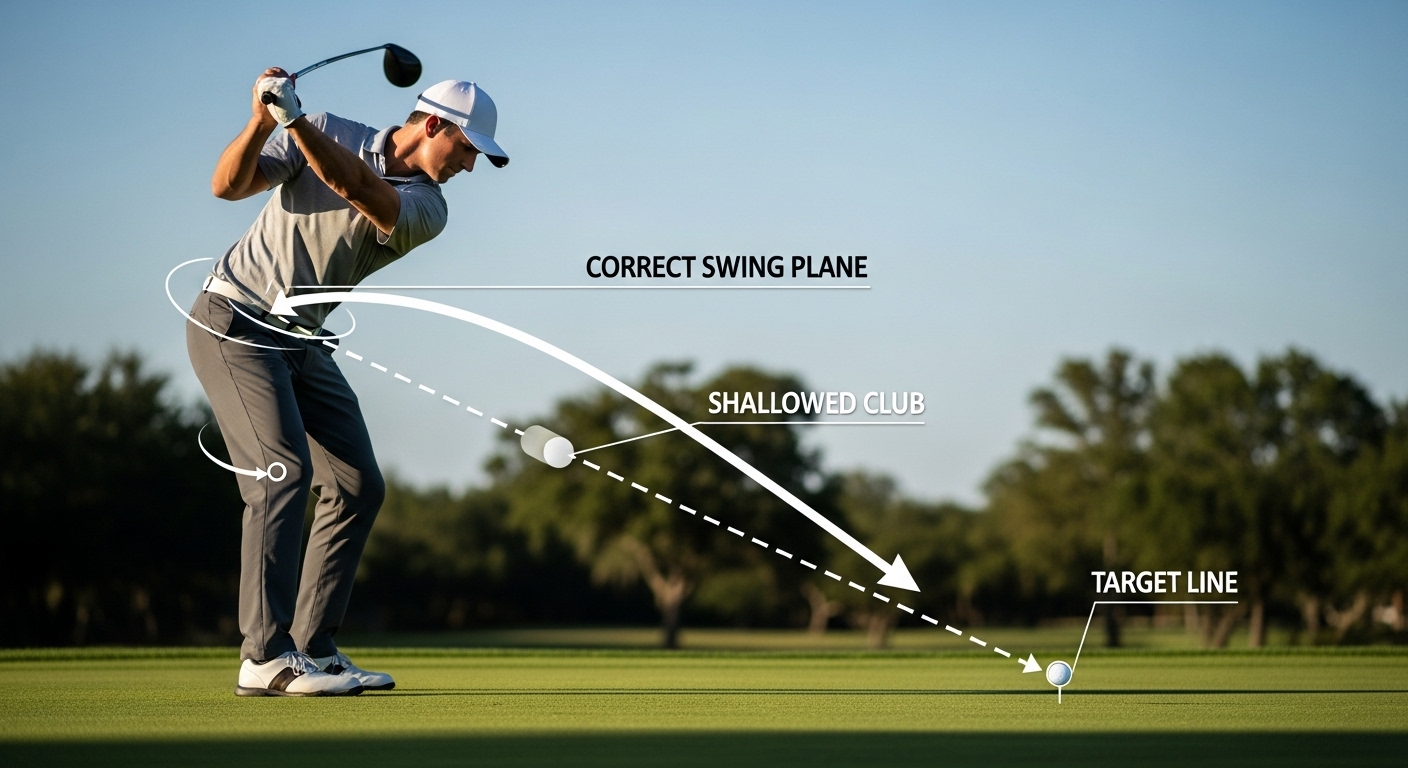
When the lower body leads and the upper body stays stable the club automatically begins to shallow or fall slightly behind the body. This movement creates an ideal approach angle into the ball. Trying to force the club into this position usually causes over correction but letting the proper sequence work leads to a natural shallow.

Avoid Common Downswing Mistakes

Rushing From the Top

Starting the downswing too aggressively with the shoulders throws the club out over the target line and leads to pulls and slices.

Early Release

Casting the club before impact drains power and raises the chances of thin and weak strikes.

Spinning the Hips

If the hips rotate too quickly without shifting pressure forward the arms trail behind and the swing path becomes erratic.

Conclusion

A powerful repeatable downswing comes from proper sequencing and posture rather than force. Focus on initiating the movement with your lower body keeping your arms relaxed and maintaining a strong spine angle. Let the club shallow naturally and avoid the urge to rush from the top. These fundamentals help you deliver the club to impact with speed and accuracy.

Product added to cart View Cart