Smarter Golf Starts With Better Motion

Understanding Golf Scores

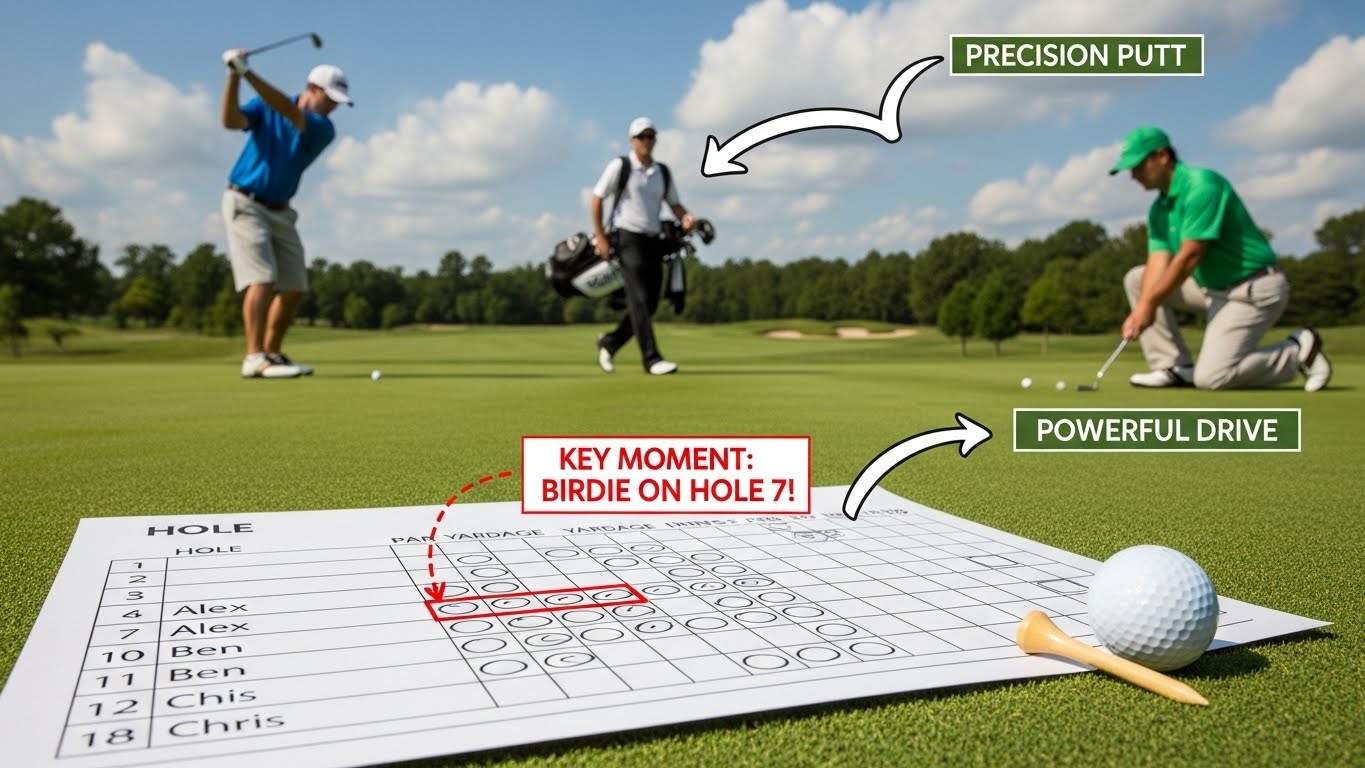
Scoring in golf can seem confusing at first but once you know the basics it becomes a clear way to track performance, evaluate progress and enjoy the game more. At Spine Align Golf we believe that knowing the standard scoring terms helps every golfer beginner or advanced understand their performance and aim for improvement. This guide explains the key golf scores, what they mean and why they matter.

stats

What Is “Par” and Why It Matters

In golf the term “par” defines the standard number of strokes that a proficient golfer is expected to take to complete a hole. The par value depends on the length and difficulty of the hole, often par-3 par-4 or par-5.

Completing a hole in exactly that number of strokes is called “par” or sometimes noted as “E” on a scorecard.

Likewise an entire course has a “course par” which is the total of all hole parts. For example many courses have a total par around 72 strokes for 18 holes.

Common Golf Score Terms Relative to Par

Golf uses special terms to describe how a player’s strokes compare to par on any given hole. Here are the most common ones:

Birdie (one under par)

A “birdie” is recorded when the golfer completes a hole in one stroke fewer than the hole’s par. For example scoring 3 on a par-4 hole or 4 on a par-5 hole.

Eagle (two under par)

An “eagle” happens when you complete a hole in two strokes fewer than par. For example finishing a par-5 in just 3 strokes or a par-4 in 2.

Albatross (Double Eagle, three under par)

When a golfer finishes a hole in three strokes fewer than par it is called an “albatross” or “double eagle.” For instance scoring 2 on a par-5 hole. This is rare and quite impressive.

Bogey (one over par), Double Bogey and Worse

If you complete a hole in one stroke more than par that is called a “bogey.” For a par-4 hole that means 5 strokes.

If you take two strokes more than par that is a “double bogey.” Taking three or more strokes above par on a hole is typically referred to as triple bogey or quadruple bogey and so on.

These higher-than-par scores happen especially when a hole goes poorly but are part of the game for many golfers.
How Scoring Works Across a Full Round

Golf is usually played over 18 holes. Each hole has a par and after finishing all holes you tally all strokes (or adjust scores relative to par). Your final round score is compared against the course par to see if you are under, equal to or over par overall.

For example on a par-72 course if you complete the round in 70 strokes you are 2 under par. If you take 85 strokes you are 13 over par.

This overall score gives a clear metric of your performance and helps you compare rounds or track improvement over time.

Why Knowing Score Terms and Using Them Matters for Golfers

Understanding scoring terms helps you interpret each hole’s result and the complete round. It helps you set target birdie-par-bogey goals and provides clarity on progress.

Tracking your scores helps identify strengths and weaknesses whether in driving approach or putting. It also allows you to measure improvement over time and compare with other golfers fairly.

This clarity helps you make better decisions on course strategy, choose when to play safe or aggressive and manage expectations realistically.

stats2

Conclusion

Scoring is at the heart of golf and knowing what terms like par birdie eagle bogey and albatross mean gives you insight into your game. When you understand how to score and what each result signifies you can track your progress, beat your personal best and improve intentionally.

For more in-depth guidance visit other topics in the Spine Align Golf knowledgebase or download the Spine Align App for personalized performance tracking. Explore Gold Academy video sessions to strengthen your game smartly and consistently.

Product added to cart View Cart