

Smarter Golf Starts With Better Motion

Complete Guide to the Golf Backswing

A controlled powerful backswing forms the backbone of a consistent golf swing. At Spine Align Golf we focus on teaching golfers how to move with balanced rhythm and efficiency so the body and club create a strong position at the top of the swing. A well structured backswing makes it easier to deliver the club with speed, accuracy and repeatability.

Back Swing

Why the Backswing Matters

The backswing sets up the path and power of your entire swing. When your body rotates correctly and the club stays on plane you create stored energy that can be released through impact. A backswing that is rushed, lifted or misaligned forces compensations that can lead to inconsistent ball flight.

A strong backswing helps you:
  • Maintain balance throughout the swing.
  • Build controlled power without forcing speed.
  • Position the club on a plane.
  • Improve timing for better contact.

Key Elements of an Effective Backswing

Maintain Posture

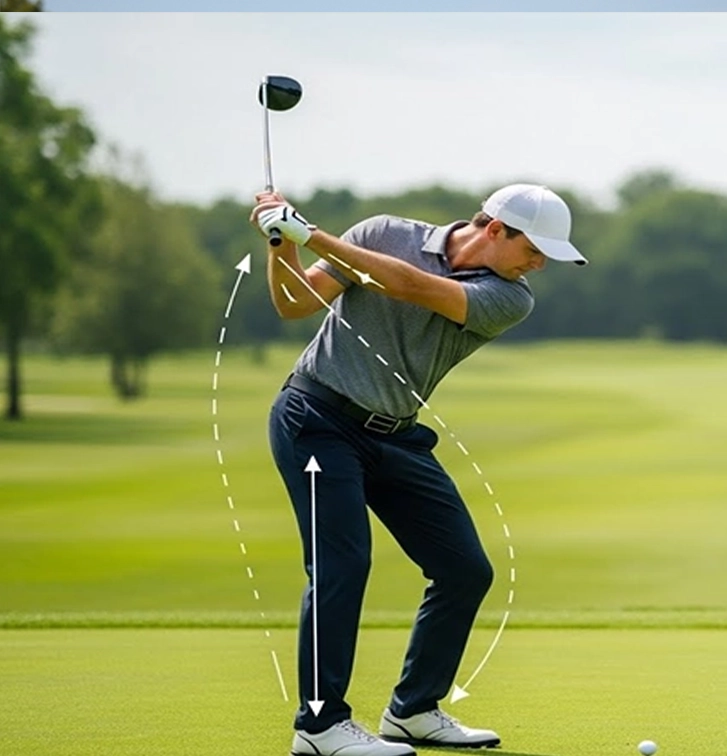
Stay grounded and keep your spine angle stable. Avoid standing up or dropping your trail side as the club moves back. Good posture allows your shoulders to turn freely.

Turn the Shoulders Instead of Lifting the Arms

Your shoulders should drive most of the movement. Lifting the arms too early takes the club off plane and limits rotation.

Keep the Lead Arm Long but Relaxed

The lead arm should extend naturally without locking out. This helps maintain width which builds leverage for more controlled speed.

Shift Pressure to the Trail Foot

As you turn load into your trail side without swaying away from the target. Pressure shift is key for creating a powerful transition.

Club Position at the Top

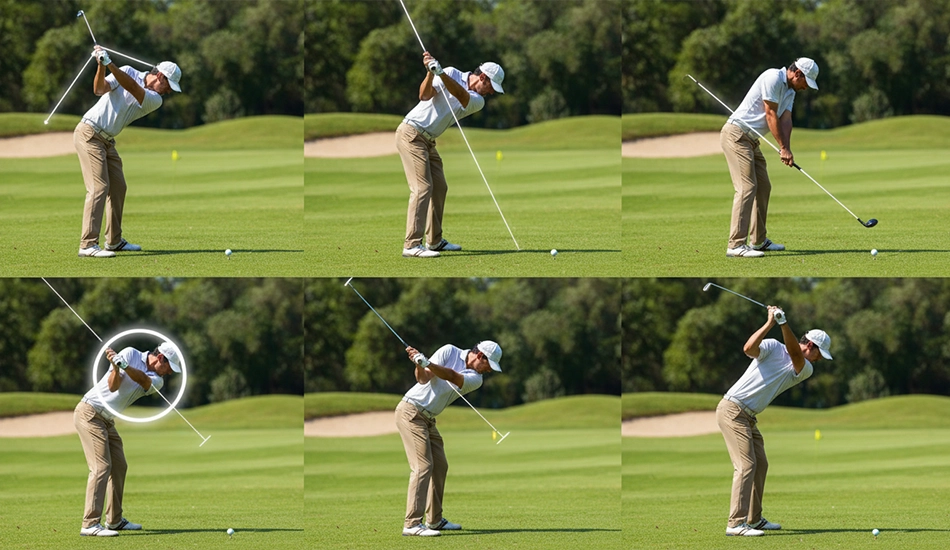
At the top of the backswing the club should point roughly toward the target with your wrists set and your body fully rotated. Avoid overswinging or collapsing the arms.

Common Backswing Mistakes

Swaying Instead of Rotating

Moving laterally away from the ball prevents a strong return to impact. Focus on turning around your spine rather than drifting to the side.

Overswinging

Going too far past a controlled top position can lead to loss of balance and timing.

Losing Width

Bending the lead arm or collapsing the structure of the swing reduces energy and consistency.

Club Falling Behind the Body

When the club gets stuck behind you early it becomes difficult to bring it back to the ball without major adjustments.

How to Practice a Better Backswing

Use Slow Rehearsals

Repeated slow motions help you feel the correct rotation and hand path.

Pause at the Top

Stopping briefly at the top helps you identify balance issues and club alignment.

Train the Shoulder Turn

Exercises that improve mobility and rotation can dramatically improve your backswing.

backswing
Product added to cart View Cart