
Smarter Golf Starts With Better Motion

Understanding the Golf Swing Plane for Better Consistency

The swing plane is one of the most important elements in building a repeatable and effective golf swing. At Spine Align Golf we teach that your swing plane is the invisible path your club travels on as it moves around your body. When your club stays on a proper plane you create cleaner contact, improved accuracy and more predictable ball flight. Learning how your swing plane works is essential for golfers at every skill level.

The Two Main Types of Swing Plane

Although every golfer has a slightly different motion, swing planes usually fall into two broad types that help describe how the club moves.

A Step Swing Plane

A steep swing plane happens when the club travels more vertically during the backswing. This often results in a more up and down motion that produces higher ball flight but can also cause slices or pulls if the club comes down too sharply.

Golfers who stand too upright or lift their arms excessively are more likely to create a steep plane.

A Shallow Swing Plane

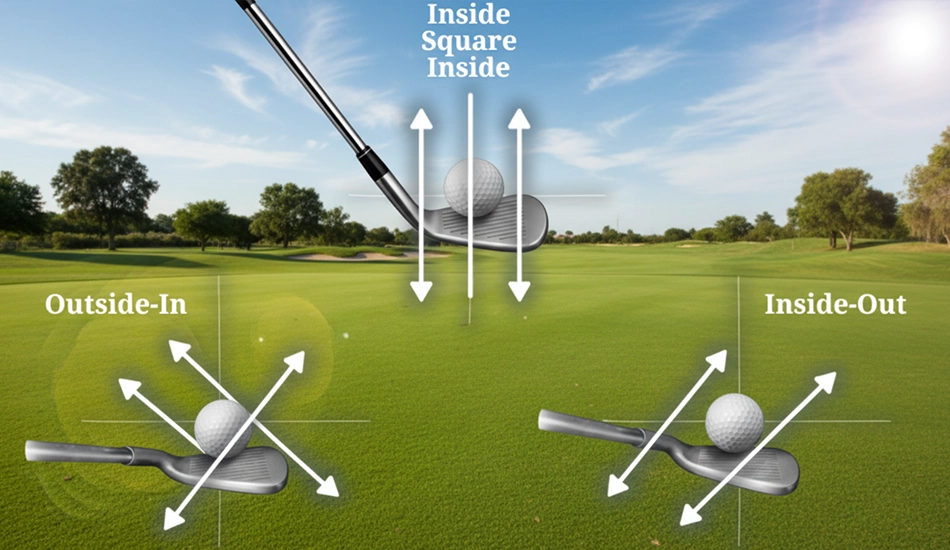
A shallow swing plane occurs when the club travels more around the body. This can help create a draw and produce a lower, more penetrating ball flight. However if the swing becomes too shallow the club may approach the ball from too far inside which can lead to hooks or blocks.

Golfers who flatten their backswing or rotate excessively early in the motion may fall into this category.

How the Setup Influences Your Swing Plane

A repeatable swing plane starts in the address position. Your posture alignment and grip all shape the way the club naturally wants to travel.

Key setup influences include:
  • Spine angle.
  • Arm position.
  • Distance from the ball.
  • Amount of knee flex.
  • Club shaft angle at address.

If any of these are out of balance your swing plane will often follow the same imbalance.

What the Swing Plane Really Means

Your swing plane describes the angle and direction the club travels from start to finish. It is shaped by your posture, the way your arms move and how your body turns. A good swing plane allows your club to return to the ball with solid contact while a poor one can lead to slices, hooks, fat shots and thin shots.

Many golfers imagine the swing plane as a tilted circle or dome that the club should follow. When the club wanders too far above or below this ideal track it becomes more difficult to make consistent strikes.

Common Mistakes That Lead to an Incorrect Swing Plane

Several frequent errors can knock your club off plane:

  • Lifting the arms instead of turning the torso.
  • Allowing the club to roll behind the body early in the backswing.
  • Starting the downswing with the shoulders instead of the lower body.
  • Standing too close or too far from the ball.
  • Poor grip position that changes the way the club moves.

These problems can change the angle of your club during the swing leading to inconsistent shots that are difficult to correct without understanding the underlying cause.

Why Swing Plane Matters for Ball Flight

Your swing plane and clubface position work together to decide the curve of the ball. Even with a square face a path that is too steep or too shallow can send the ball in the wrong direction. When your swing plane becomes stable you begin to control not only direction but also trajectory and distance.

A consistent swing plane is one of the foundations of long term improvement and helps you build confidence in your game.

How to Stay on Plane More Consistently

Improving your swing plane begins with awareness and simple checkpoints. Here are a few helpful ways to build a more reliable motion:

Use Your Shoulder Turn

Focus on turning your upper body instead of just lifting the club. This helps the club travel on a natural arc.

Keep Your Hands Connected to Your Chest

Imagine your hands staying in front of your chest throughout the motion. This prevents the club from drifting too far behind you.

Maintain Your Posture

Good posture keeps your body in a position that supports a correct swing plane. Avoid standing up or dropping your head during the swing.

Follow the Club Shaft Angle

The angle of your club at address serves as a good reference. During the backswing and downswing the club should travel close to that original angle.

Conclusion

Mastering your swing plane gives you more control over contact accuracy and shot shape. Understanding this concept helps you develop a reliable motion that holds up under pressure and leads to better scoring.

To continue improving your fundamentals visit another Knowledgebase article from Spine Align Golf. You can also start downloading the Spine Align App or explore the Golf Academy videos for guided training that will help you refine every part of your swing.

Product added to cart View Cart