

Smarter Golf Starts With Better Motion

Understanding Shaft Lean at Setup for Cleaner Contact and Better Ball Flight

Shaft lean at address influences how the clubface meets the ball and how the ball launches off the club. At Spine Align Golf we teach that the correct amount of shaft lean sets the stage for solid contact and predictable ball flight. Whether you lean the shaft forward backward or keep it neutral each choice changes the loft and the strike. Learning how to position the shaft properly for each club helps you produce consistent and powerful shots.

What Shaft Lean Means

Shaft lean refers to the angle of the club shaft in relation to the ball at setup. When the shaft leans forward the handle sits ahead of the clubhead. When the shaft leans backward the handle sits behind the clubhead. A neutral position places the shaft almost straight up with the hands centered over or slightly ahead of the ball depending on the club.

This angle has a significant impact on loft contact and trajectory.

Forward Shaft Lean Explained

Forward shaft lean reduces the delivered loft at impact and encourages the hands to lead the clubhead. This helps compress the ball and create a lower, more penetrating shot. Forward lean is commonly used with irons and wedges where players want ball first contact and a descending strike.

Benefits of forward shaft lean include:
  • Cleaner ball first contact.
  • Lower stronger trajectory.
  • Better compression with irons.
  • Improved control of distance and spin.
Shaft Length

Too much forward lean can create digging or low hooks so balance is important.

Backward Shaft Lean Explained

Backward shaft lean adds loft to the club and encourages the clubhead to pass the hands. This can lead to shots that float high and lose distance. While it is generally not recommended for irons, backward lean can be used intentionally with certain specialty shots such as flop shots.

Common issues caused by backward shaft lean include:
  • High weak ball flight.
  • Inconsistent contact.
  • Difficulty controlling distance.
  • Increased risk of scooping at impact.

Most golfers should avoid backward lean in a standard setup unless they are performing a very specific shot.

Neutral Shaft Lean Explained

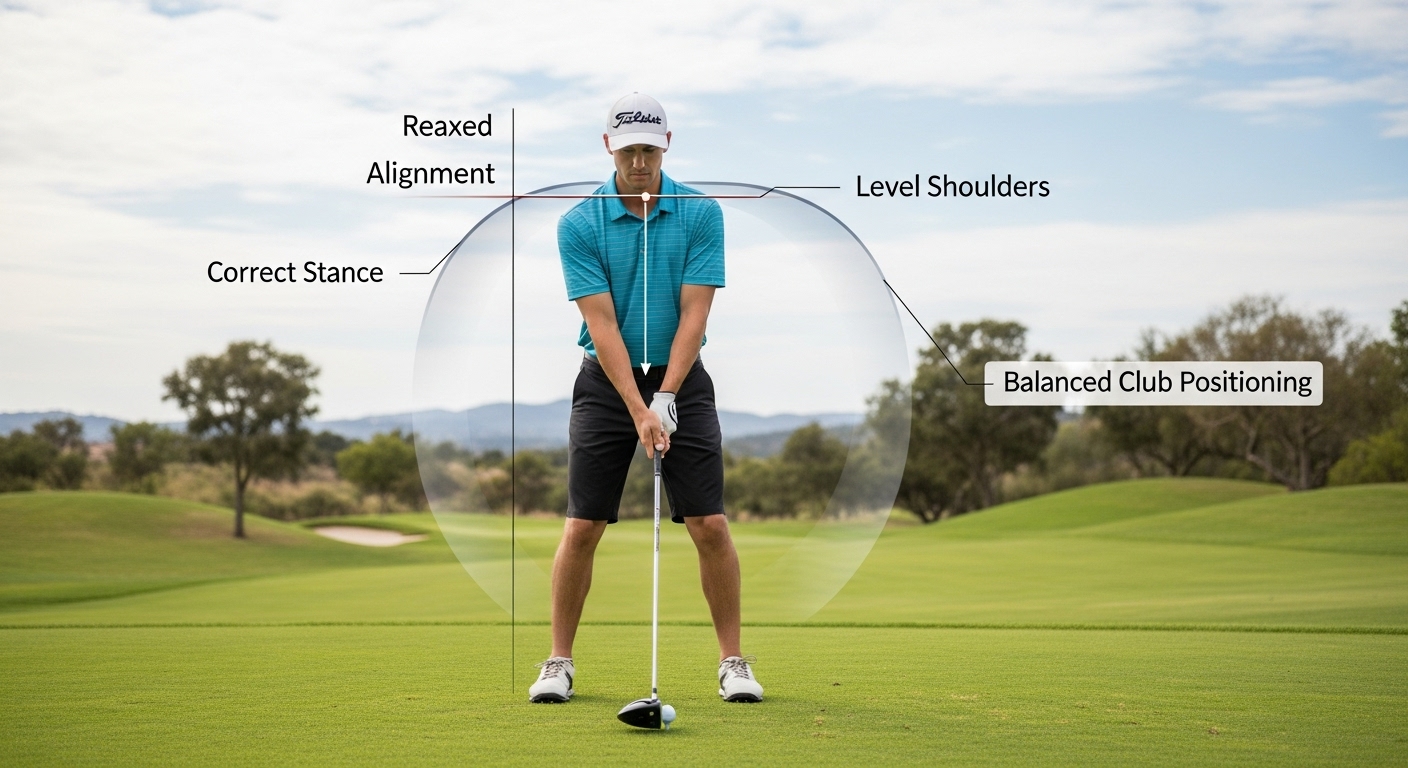
A neutral shaft lean occurs when the shaft sits close to vertical with the hands slightly ahead of the clubhead for most clubs. This position allows the club to work as designed and supports a smooth swing path. Neutral lean is commonly used with drivers and fairway woods since those clubs are meant to sweep the ball rather than strike down on it.

A neutral position offers:
  • Natural use of the club’s built in loft.
  • Consistent launch and spin.
  • A relaxed balanced setup.
  • Ideal conditions for sweeping shots.

Finding the Correct Shaft Lean for Each Club

The proper shaft lean changes depending on which club you are hitting:

  • Wedges and short irons benefit from slight forward lean.
  • Mid irons and long irons use a controlled forward lean with less angle.
  • Hybrid fairway woods and drivers require a neutral lean.

Matching the shaft lean to the club ensures you use the loft as designed and strike the ball more consistently.

How Shaft Lean Affects Impact

Your setup determines how easy it is to reach the proper impact position. Forward lean helps create a downward strike with irons. Neutral lean supports an upward strike with the driver. Backward lean forces the club to add loft and encourages the wrists to flip causing inconsistent contact.

When the shaft is positioned correctly your hands, arms and club return to the ideal alignment at impact without needing extra manipulation.

Common Mistakes with Shaft Lean

Golfers often change shaft lean without realizing it. Some frequent mistakes include:

  • Pressing the hands too far forward.
  • Letting the trail hand dominate and push the grip backward.
  • Setting up with poor posture that alters the angle of the shaft.
  • Trying to force forward lean instead of allowing a natural position.

These habits can cause inconsistent shots even if the rest of the setup is strong.

Simple Drills to Train Proper Shaft Lean

Here are helpful ways to learn the correct shaft lean for each club:

  • Place an alignment stick near the grip to monitor forward lean.
  • Rehearse your setup in a mirror to check shaft angle.
  • Practice slow swings focusing on where your hands return at impact.
  • Use a wedge to learn small forward lean then apply the feeling to other clubs.

These drills reinforce the relationship between hands and clubhead and build reliable setup habits.

Conclusion

Shaft lean at setup is one of the most important factors behind solid ball striking and predictable ball flight. Learning how to match the shaft angle to the club you are using helps you compress the ball correctly with irons and create an efficient launch with your longer clubs. Small changes to your setup can produce immediate improvements in consistency, accuracy and contact quality.

Explore more setup fundamentals in the Spine Align Golf Knowledgebase or start downloading the Spine Align App for guided instruction. You can also watch the Golf Academy videos for step by step training that helps you refine your shaft position and elevate your swing.

Product added to cart View Cart