
Smarter Golf Starts With Better Motion

Clubface Position Relative to the Target Line

The position of the clubface at address is one of the most important factors in determining the starting direction and overall flight of your golf shots. Understanding whether your clubface is square open or closed relative to the target line will help you build a more consistent setup and gain better control over your ball flight.

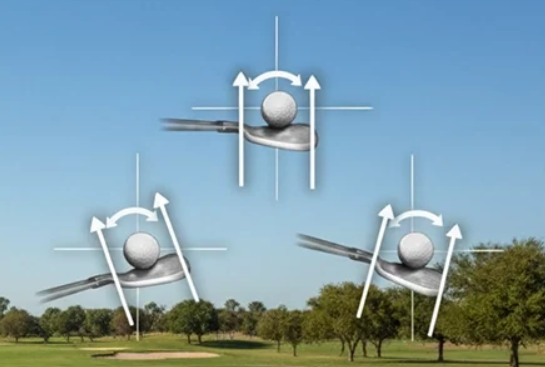
open square closed faces top view

What It Means to Aim the Clubface at the Target Line

The target line is the imaginary straight line running from your ball to your intended target. Your clubface can be positioned in three ways relative to that line. Each position affects where the ball will start and how it moves through the air.

Square Clubface Setup

A square clubface points directly along the target line. This is the neutral and most common setup for straight shots. A square face helps the ball launch in line with your intended target and reduces the amount of sidespin created at impact. This is an ideal starting point for most golfers because it simplifies the relationship between aim and ball flight.

Closed Clubface Setup

A closed clubface points to the left of the target line for a right handed golfer. This position lowers the effective loft and produces a more penetrating ball flight. Because a closed clubface reduces bounce the club may dig more into the ground especially when playing from softer lies or bunker sand. A closed face encourages the ball to start left and can create a drawing motion depending on the swing path.

Open Clubface Setup

An open clubface points slightly to the right of the target line for a right handed golfer. This position encourages the ball to start right of the target and promotes a higher launch because the loft increases slightly when the face opens. Many golfers also notice that an open face exposes more of the club's bounce especially with wedges which can keep the leading edge from digging into the turf.

Common Mistakes When Positioning the Clubface

Many golfers attempt to adjust the clubface but accidentally introduce new problems. Here are common errors to avoid:
  • Twisting the club in the hands after grounding it which often leads to the club returning to its original position during the swing.
  • Gripping the club first then trying to open or close the face instead of setting the face angle before taking your grip.
  • Allowing the eyes to misjudge the face angle by standing too far behind or too far above the ball.
  • Changing clubface position inconsistently from shot to shot.

How to Practice Setting the Clubface Correctly

Improving clubface control starts with simple repeatable steps:
  • Set the clubface behind the ball first and aim it exactly where you want the ball to start.
  • Grip the club only after the face angle is correct so your natural grip strength supports the position.
  • Use alignment sticks or a chalk line during practice to check your accuracy.
  • Rehearse your setup before every shot so the motion becomes automatic.

Conclusion

Understanding how to position the clubface relative to the target line is essential for accurate controlled and reliable ball flight. Whether you want to hit straighter shots, shape your ball intentionally or eliminate common misses, learning to manage your clubface at address will transform your game.

To continue improving your setup fundamentals explore more articles in the Spine Align Golf Knowledgebase. You can also start downloading the Spine Align App or watch our Golf Academy videos to gain deeper guidance and personalized instruction for every part of your swing.

Product added to cart View Cart