
Smarter Golf Starts With Better Motion
Proper foot positioning is one of the key elements in a powerful and consistent golf swing. How your feet are angled, also known as foot flaring, can significantly influence your balance, posture, and swing path. In this article we will explore foot flaring, explain the advantages and disadvantages, and provide practical tips to find the right stance for your game.
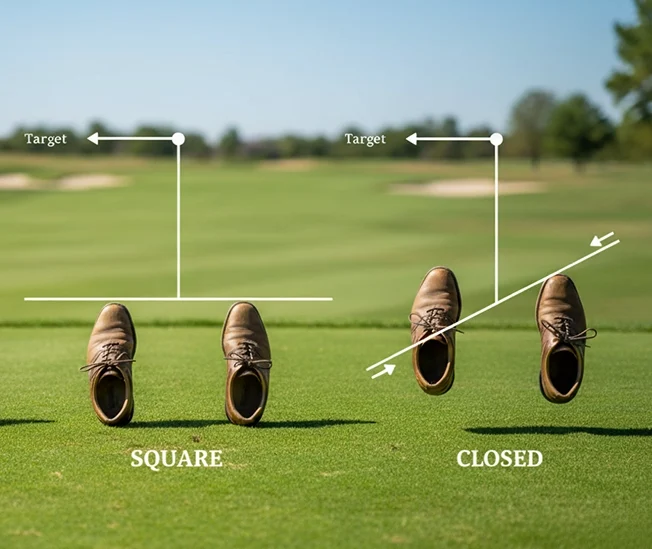
Foot flaring refers to the angle at which your feet are rotated outward from the center of your stance. For example, when your toes point slightly away from your target line, this is considered flaring. Most golfers naturally flare their lead foot more than the trail foot to improve stability and comfort during the swing.
The degree of flare is often influenced by body structure, hip mobility, and personal comfort. There is no single perfect angle for every golfer, but understanding your natural tendencies can help you create a consistent and powerful swing.
Flexibility, body mechanics, and comfort should dictate the exact angle. Avoid forcing your feet into an unnatural position as it can negatively affect your swing and cause discomfort.
Pay attention to these common issues and adjust gradually until you find a comfortable stance that supports your swing mechanics.
Finding the right foot flare is a personal journey that can dramatically improve your swing performance. Small adjustments in foot positioning can lead to better balance, smoother rotation, and more consistent ball striking.
For more in-depth guidance on golf setup and swing mechanics, explore our Spine Align Golf Knowledgebase. You can also start downloading the Spine Align App or view our Golf Academy videos to take your game to the next level.
Feet Position
Feet Position