

Great golf posture isn’t just a “nice to have.” It’s the difference between flushing shots and fighting your swing all day. When your posture is right, the swing feels natural. When it’s wrong, even your best effort falls apart.
The good news? You don’t need to be flexible, athletic, or young to build excellent posture over the ball. Golf posture is a learned position, and with a few simple checkpoints, golfers of all body types and skill levels can achieve it.
Let’s break it down clearly, simply, and visually.
Why Proper Golf Posture Is So Important
At its core, the golf swing is a rotational movement around a central axis—your spine.
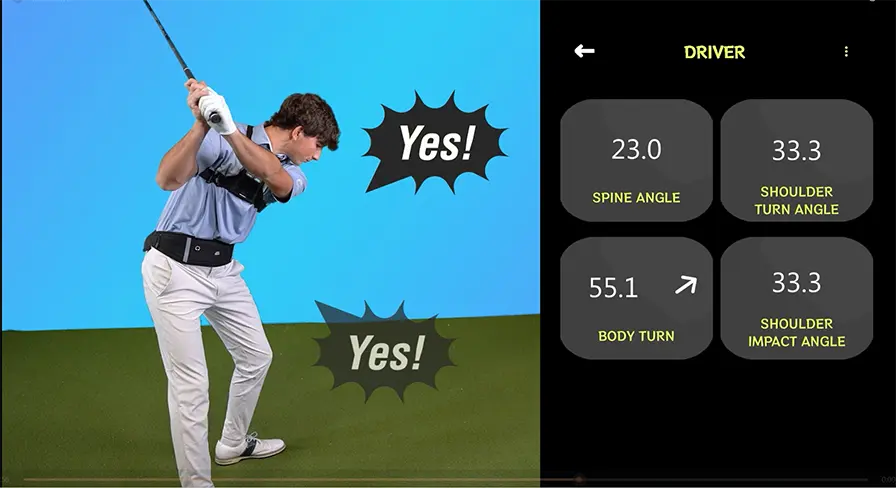
When your spine angle is set correctly at address:
- Rotation becomes easier
- Balance improves instantly
- Impact position becomes more repeatable
- Power increases without swinging harder
Poor posture, on the other hand, forces your body to compensate mid-swing, leading to inconsistent contact and loss of control.
Think of posture like aligning the wheels on a car. If the alignment is off, everything wears out faster—and performance suffers.
Can Anyone Achieve Good Golf Posture? Absolutely.
Everyone has a different natural posture when standing, sitting, or driving. That doesn’t mean your golf posture has to match those habits. Golf posture is intentional, not automatic.
With a little practice, you can create a strong, athletic setup—even if your everyday posture isn’t perfect.
Step-by-Step Guide to Proper Golf Swing Posture
Step 1: Start Tall With the Club in Front of You
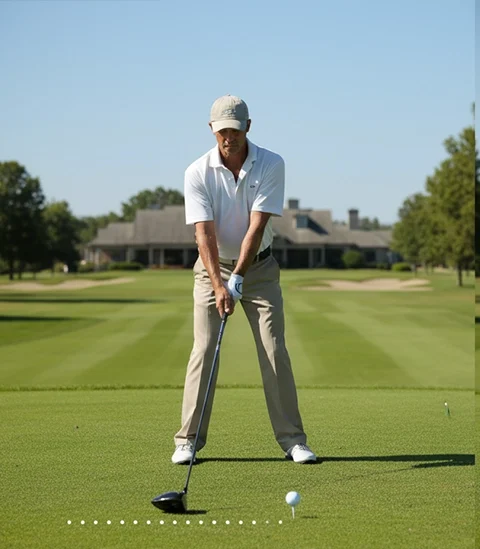
- Stand upright with your feet about shoulder-width apart
- Hold the club straight out in front of you
- The grip should point directly at your belly button
- Arms and legs remain straight
- Pull your shoulders gently back and lift your chest—no tension, just tall and relaxed. Why this works This resets your spine into a neutral position before bending forward
Step 2: Bend Forward From the Hips (Not the Waist)
What to do
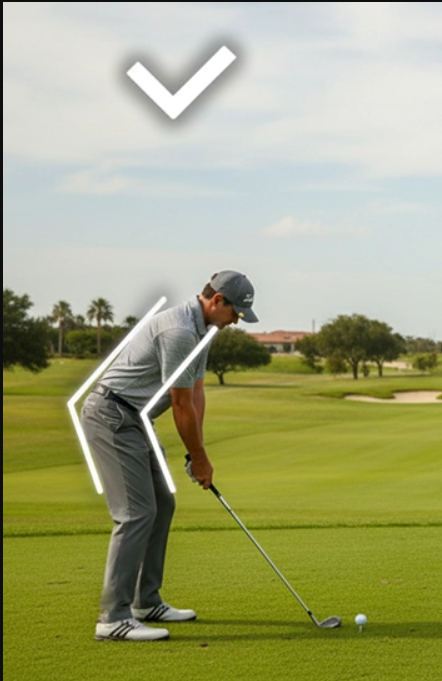
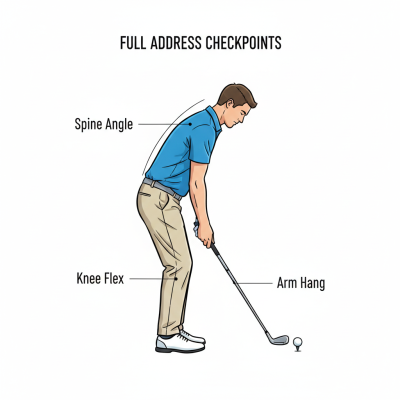
- Keeping your back flat, tilt forward from the hips
- Push your hips slightly backward
- Allow your upper body to lower naturally
- Maintain a proud chest and neutral spine
- Your lower back should feel flat—not rounded and not arched excessively
- Key feeling: Imagine closing a car door with your hips while holding groceries. That’s the correct hinge.
Step 3: Let the Arms Hang Naturally
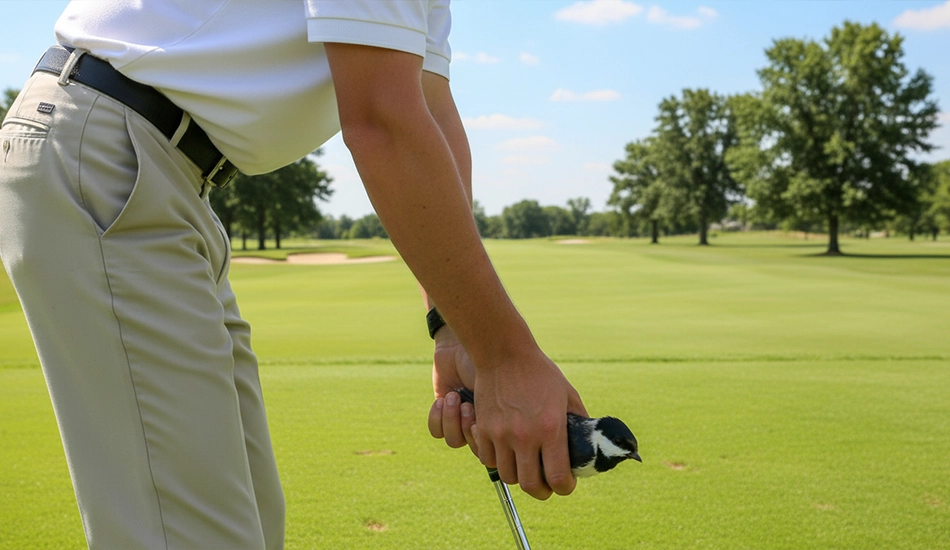
- Reduces tension
- Promotes consistent swing plane
- Improves center contact
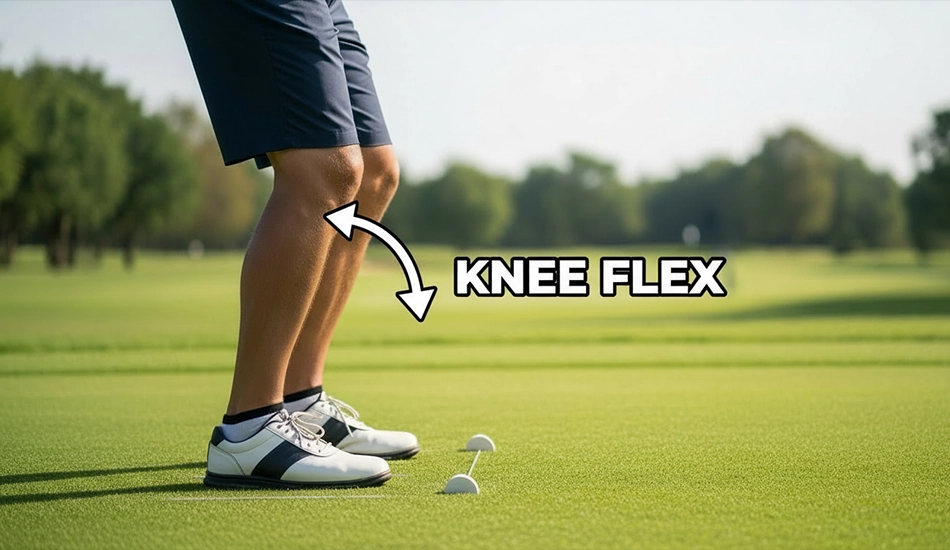
Step 4: Add Slight Knee Flex
- Flex your knees slightly
- Feel athletic, not squatted
- Weight should stay centered in your feet
- Avoid the common amateur mistake of bending the knees too much. Excessive knee flex restricts rotation and balance.
- Simple test: If your thighs feel tense, you’ve bent too much.
Step 5: Set the Club Behind the Ball
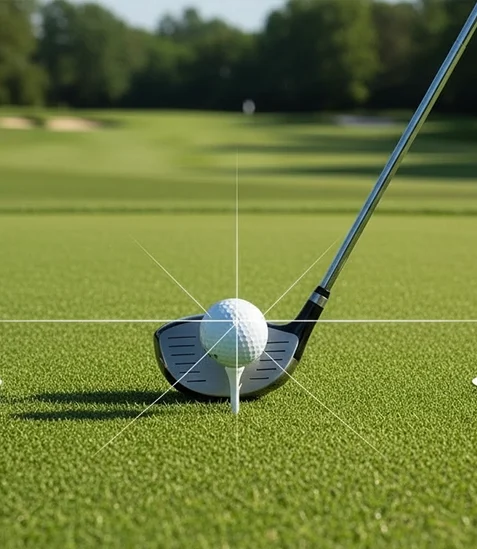
- Spine remains neutral
- Chest stays lifted
- Arms remain relaxed
- At this point, your posture should feel stable, balanced, and repeatable.
Common Golf Posture Mistakes (And How to Fix Them)
Slumped or Rounded Back
- Cause: Bending from the waist instead of hips
- Fix: Reset tall, hinge properly, lift chest
Standing Too Upright
- Cause: Fear of bending too much
- Fix: Add hip hinge until arms hang naturally
Over-Bent Knees
- Cause: Trying to feel “athletic”
- Fix: Straighten slightly until rotation feels free
How Proper Posture Improves Your Swing
When posture is correct:
- Your spine stays stable through rotation
- Club path becomes more predictable
- Impact position improves naturally
- Power increases without extra effort
Instead of manipulating the club, you simply turn around a solid base.
Strength and Mobility: The Hidden Factor
If you struggle to hold good posture:
- Core weakness may be the issue
- Hip and hamstring tightness can limit hinge motion
Simple golf-specific strength and mobility work can dramatically improve posture endurance.
Final Thoughts on Golf Swing Posture
Great posture doesn’t happen by accident—it’s built deliberately. Once it becomes part of your setup routine, your swing will feel smoother, more powerful, and far more consistent.
Before fixing your takeaway, your transition, or your release—fix your posture. Everything else becomes easier from there.