

A Brief History of Irons and Equipment in Golf
Golf’s been around for centuries, and irons have been part of the game almost from the very beginning. Understanding where these clubs came from gives you a real appreciation for just how refined the modern iron has become.
From Hickory Shafts to Modern Steel
The earliest golf clubs were made entirely from wood both the head and the shaft. Iron-headed clubs began appearing in the 17th and 18th centuries in Scotland, where the game originated, and they were forged by blacksmiths rather than manufactured in factories. These early irons were crude by modern standards, with thick, heavy heads and hickory wood shafts that required a very different swing technique to use effectively.
The introduction of steel shafts in the 1920s was arguably the biggest single advancement in golf club technology. Steel shafts were more consistent, more durable, and allowed manufacturers to produce clubs with much more precise tolerances. The game changed enormously as a result scoring averages dropped, and the sport became far more accessible to everyday players.
Through the mid-20th century, most irons were what we’d now call blade irons thin, compact clubheads with a flat back and relatively small sweet spot. These demanded precise ball-striking, and they rewarded it with exceptional feel and workability. Tour players loved them. Average golfers struggled with them.
The Rise of Cavity Back Irons
Everything changed in 1969 when Ping introduced the cavity back iron. By removing metal from the back of the clubhead and redistributing it around the perimeter, Ping’s designers dramatically increased the moment of inertia (MOI) the club’s resistance to twisting on off-centre hits. The result was a club that was far more forgiving of mis-hits, producing usable shots even when the ball wasn’t struck from the sweet spot.
This was a genuine revolution. Suddenly, golfers who’d never been able to play consistently with blades had access to clubs that could forgive their mistakes. The cavity back design became the standard for game-improvement irons, and today the vast majority of irons sold worldwide are built on this principle with manufacturers constantly pushing the boundaries of how much forgiveness they can engineer into a clubhead.
Forged vs. Cast Irons: Which Should You Choose?
One of the most enduring debates in golf equipment circles is the question of forged versus cast irons. Both manufacturing processes produce excellent clubs, but they’re suited to different types of golfers. Understanding the difference helps you make a smarter purchasing decision.
Cast irons are made by pouring molten metal (usually 17-4 stainless steel) into a mould. This process allows manufacturers to create extremely complex shapes with precise cavity geometries, thin faces, and elaborate weight distribution systems that simply aren’t possible with forging. Cast irons dominate the game-improvement category for exactly this reason.
Forged irons, on the other hand, are made by pressing a billet of soft carbon steel under enormous pressure into a rough club shape, which is then machined to its final dimensions. The forging process compresses the grain structure of the metal, producing a denser, softer feel at impact that many experienced golfers describe as distinctly superior to cast irons.
The Feel and Feedback Advantage of Forged Irons
Ask any tour professional why they prefer forged irons and you’ll almost always get the same answer: feel. A well-struck forged iron produces a soft, buttery sensation at impact that tells the player exactly where on the face contact was made. Mis-hits feel distinctly different there’s a harsh, “dead” sensation that immediately communicates that something went wrong.
This feedback is genuinely valuable for skilled golfers who can use that information to self-correct during a round. If your 7-iron feels slightly off on the heel for two consecutive shots, you know to check your setup before the next one. That kind of real-time data is something that highly forgiving cast irons actually work against they’re designed to mask feedback, which is great for beginners but actively unhelpful for players trying to refine their technique.
Forged irons also offer superior workability the ability to shape shots deliberately. Because the smaller, denser clubhead is less resistant to twisting, a skilled player can manipulate the face angle at impact to produce draws, fades, and trajectory adjustments that would be much harder to execute with a game-improvement iron.
Why Cast Irons Work Better for Most Golfers
Here’s the honest truth: for the majority of recreational golfers, cast irons are the better choice. The game-improvement features built into modern cast irons wide soles, deep cavities, low centres of gravity, high MOI compensate for the kinds of swing flaws that every amateur golfer deals with. They produce more consistent distance, higher launch, and more forgiving results on off-centre hits.
If you’re shooting in the 90s or above, you’re going to hit more bad shots than good ones in any given round. A forged blade iron punishes those bad shots harshly. A cast game-improvement iron turns those same mishits into playable shots. The math is pretty straightforward: more good results equals more fun, and more fun means more practice, and more practice eventually leads to better ball-striking. It’s a virtuous cycle.
The premium muscle back and players distance irons that sit between pure blades and full game-improvement clubs offer an interesting middle ground some of the soft feel and workability of a forged iron combined with a bit more forgiveness. Brands like Titleist (the AP3/T-series), TaylorMade (the P-series), and Mizuno (the JPX-series) all offer excellent options in this category.
How to Choose the Right Irons for Your Swing
Buying irons off the rack without getting fitted is a bit like buying glasses with a random prescription you might get lucky, but you’re probably going to end up with something that doesn’t quite work for you. Custom fitting is the single most important step in the iron-buying process, and it’s become far more accessible in recent years.
Understanding Shaft Flex and Its Role in Ball Flight
The shaft is often called “the engine of the club,” and there’s real truth in that. A shaft that’s too stiff for your swing speed will produce a low, weak ball flight with a tendency to miss right (for right-handed golfers). A shaft that’s too flexible will produce an inconsistent, ballooning ball flight with a tendency to miss left.
Shaft flex is typically categorised as Ladies (L), Senior (A), Regular (R), Stiff (S), and Extra Stiff (X). As a very rough guide:
- Ladies/Senior flex: Swing speeds below 75 mph
- Regular flex: Swing speeds between 75 and 90 mph
- Stiff flex: Swing speeds between 90 and 105 mph
- Extra Stiff flex: Swing speeds above 105 mph
These ranges are approximate, and shaft selection is actually more nuanced than swing speed alone your tempo, transition speed, and wrist action all affect which shaft will work best for you. That’s why there’s really no substitute for getting measured properly.
Graphite shafts are lighter than steel, which makes them easier to swing fast ideal for players with slower swing speeds, seniors, and women. Steel shafts are heavier and more consistent from flex to flex, and most male golfers with average or above-average swing speeds prefer them. However, modern lightweight steel shafts have blurred this line considerably.
The Importance of Club Fitting for Iron Performance
A professional club fitting session is where you take everything theoretical and turn it into something practical. Most major golf retailers and equipment manufacturers now offer fitting services, and many dedicated fitting studios exist around the country. A fitting session typically involves hitting balls on a launch monitor a device that measures every relevant parameter of your shots, including ball speed, launch angle, spin rate, carry distance, and dispersion.
Armed with this data, a skilled club fitter can identify the exact combination of head design, shaft, lie angle, and grip size that produces the best results for your individual swing. It’s genuinely eye-opening. Many golfers discover they’ve been playing the wrong lie angle for years, or that a different shaft profile suddenly produces an extra 15 yards of carry with no additional effort.
Club fitting used to be the preserve of tour professionals, but that’s absolutely no longer the case. Most equipment brands offer complimentary or low-cost fitting sessions, and the investment of time and money is repaid many times over in improved performance and equipment satisfaction.
What to Expect During a Professional Iron Fitting
When you walk into a fitting studio, the process typically unfolds in several stages. First, the fitter will ask about your current clubs, your game, what you’re trying to improve, and any specific challenges you’re experiencing. They’ll then watch you hit shots with your current irons to establish a baseline.
From there, you’ll work through different head options and shaft combinations systematically, comparing data from the launch monitor after each change. A good fitter won’t just look at average distances they’ll pay close attention to dispersion (how tightly your shots cluster together), which is often a better indicator of the right fit than any individual shot.
The session typically wraps up with a recommendation for a specific set configuration sometimes including different shaft choices for the long irons versus the short irons and a discussion of price points and lead times.
FAQs About Irons
Q1: What is the easiest iron to hit for beginners?
The 7-iron is almost universally recommended as the best iron for beginners to start with. It has enough loft to get the ball airborne relatively easily, provides useful distance without being too demanding, and sits in the middle of the set where the club characteristics are balanced. Most beginners make their biggest improvement by mastering the 7-iron and then working outward from there.
Q2: How many irons should a beginner carry?
A full iron set runs from 3 or 4-iron through pitching wedge, giving you seven or eight clubs. However, beginners often find it easier to start with a half-set typically 6-iron, 8-iron, pitching wedge, and a sand wedge which keeps decision-making simpler and allows more deliberate practice with fewer clubs. There’s no rule against carrying fewer clubs than the maximum 14 allowed.
Q3: Is there a difference between men’s and women’s irons?
Yes, there are several meaningful differences. Women’s irons are typically built with lighter shafts (graphite almost universally), shorter and more flexible shafts to accommodate a typically lower swing speed, and higher loft angles to help generate more carry distance. The clubheads are also often designed with more offset where the leading edge of the face sits behind the hosel which helps get the ball airborne more easily. Any golfer with a lower swing speed can benefit from the design features found in ladies’ irons, regardless of gender.
Q4: How long do golf irons typically last?
A quality set of irons, properly maintained, will last the average recreational golfer 8 to 12 years before the technology gap becomes meaningful enough to warrant upgrading. The grooves wear down over time particularly on short irons that generate the most spin and groove wear does eventually reduce the club’s ability to generate backspin on approach shots. If you’re playing more than 30 or 40 rounds per year, your grooves will wear faster.
Q5: Should I carry a 3-iron or a hybrid?
For most golfers below a single-figure handicap, a hybrid is the better choice over a 3-iron. Hybrids are significantly easier to hit from a variety of lies, launch the ball higher for better stopping power on greens, and produce more consistent distances. The 3-iron’s advantages workability, a specific ball flight, and shot-shaping capability are largely relevant only to better players who can reliably compress the ball with a lower-lofted iron. If you’re genuinely unsure, get both on a launch monitor and let the data make the decision.
Q6: What does “offset” mean in iron design, and do I need it?
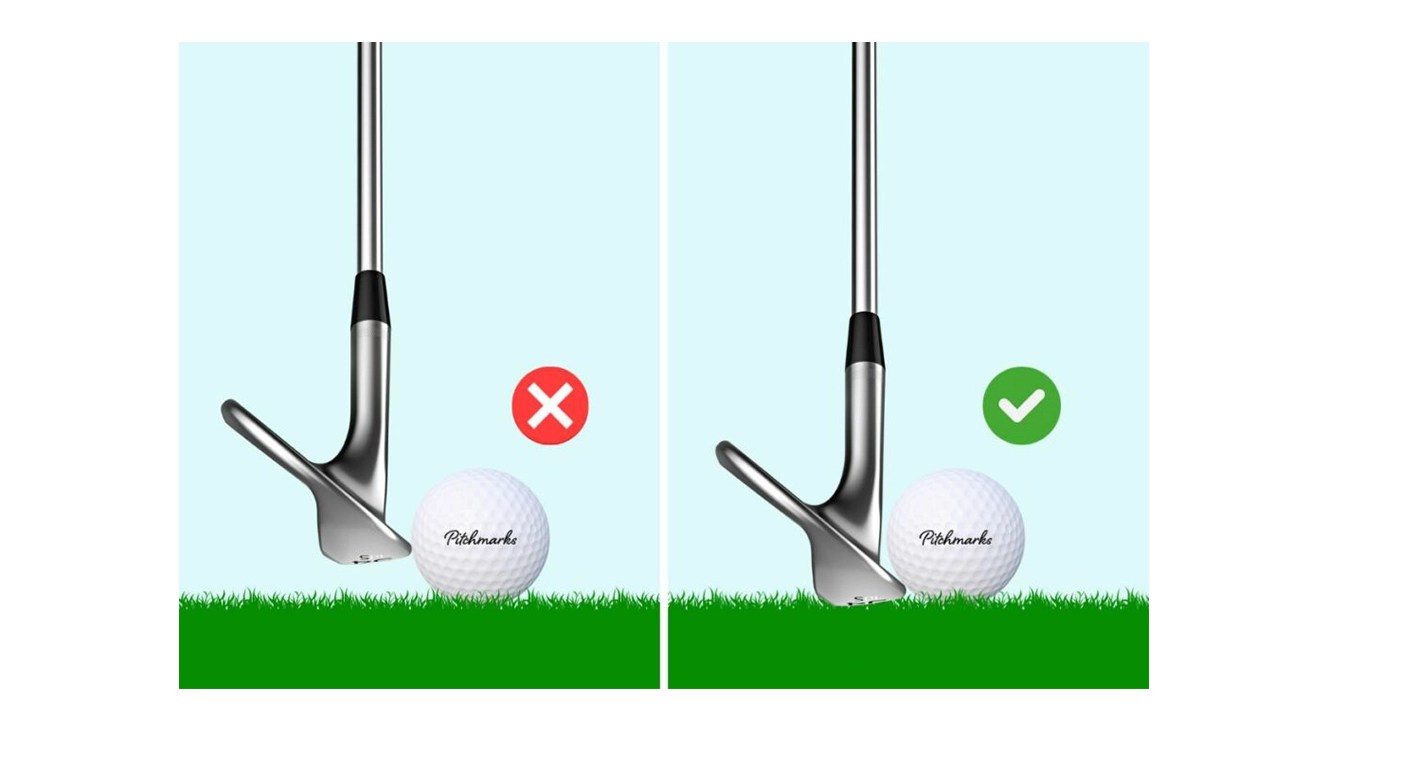
Offset refers to the positioning of the leading edge of the clubface relative to the hosel. In an offset iron, the face sits back (behind) the hosel, giving the golfer a split-second more time to square the face through impact. This helps counteract the open-face condition that produces slices, and also tends to promote a higher ball flight. High-handicap golfers generally benefit from more offset, while better players often prefer minimal offset for a cleaner look at address and more control over face angle.
Caring for and Maintaining Your Golf Irons
A good set of irons is an investment, and treating them properly extends their useful life considerably. Maintenance is straightforward but worth doing consistently.
Cleaning the grooves is the most important regular maintenance task. During a round, grass, dirt, and debris pack into the grooves after every shot, reducing their ability to grip the ball and generate backspin. Most golfers carry a small brush and a damp towel for exactly this purpose wiping the face after every shot keeps the grooves clean and ensures consistent spin production.
After a round, give your irons a more thorough clean. Use warm water, a small amount of dish soap, and a soft-bristled brush to scrub the faces clean. Rinse with clean water and dry thoroughly before putting them in your bag. This prevents the build-up of residue that can, over time, corrode the club face.
Rust prevention is more of an issue with forged carbon steel irons, which are more susceptible to surface rust than stainless steel cast irons. A light application of a purpose-made club protection spray, or even a small amount of WD-40 followed by a dry wipe, will prevent surface rust from forming on the faces and soles of forged clubs.
Regripping your irons every 12 to 18 months (or after approximately 40 rounds) keeps the grip surface tacky and properly sized. Worn grips cause golfers to grip too tightly in compensation, which creates tension in the forearms and wrists that negatively affects swing mechanics. Fresh grips feel noticeably different and better and it’s a low-cost upgrade that makes a genuine difference.
Finally, check your shafts periodically for dents, cracks, or flat spots. A damaged shaft can behave unpredictably and, in extreme cases, can break during a swing. If you notice any damage, have the club checked by a professional before hitting with it again.
Liked the expert info read more blogs to get expert insights and make your game better.