

Golf Swing Basics for Beginners
Learning golf for the first time feels overwhelming.
However, the golf swing does not need to be complicated.
Most beginners struggle because they focus on too many details.
As a result, progress slows and frustration builds quickly.
The truth is simple fundamentals create solid golf swings.
Therefore, beginners should master basics before chasing distance.
This guide breaks down golf swing basics clearly and practically.
Each step builds confidence, balance, and consistency.
Why Beginners Should Simplify the Golf Swing

Many new golfers overload their minds early.
They watch endless videos and try advanced techniques immediately.
Consequently, swings become tense and uncoordinated.
Golf works best when movements stay simple.
Moreover, the body learns faster through repetition and rhythm.
When beginners simplify the process, results improve naturally.
Start with the Proper Golf Setup

Every good golf swing begins before the club moves.
Setup determines balance, control, and consistency.
Stand with feet shoulder-width apart for stability.
Meanwhile, distribute weight evenly across both feet.
Your knees should flex slightly, not stiff or locked.
Let your arms hang naturally from your shoulders.
If you must reach for the ball, you stand too far away.
If your arms feel cramped, you are standing too close.
For beginners, place the ball in the center of your stance.
This position promotes clean contact and better timing.
Grip the Club Correctly for Control
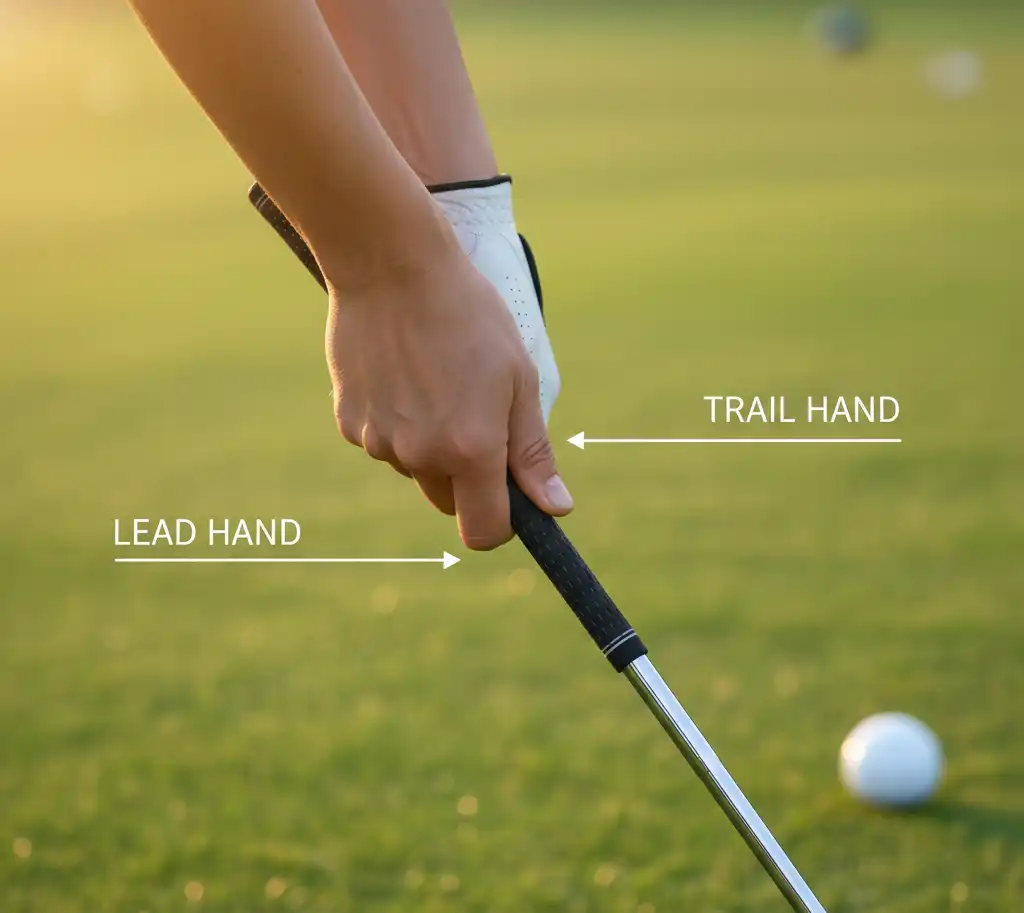
The golf grip connects you to the club.
Therefore, grip quality directly affects swing results.
Hold the club firmly but without tension.
Avoid squeezing as if holding something fragile.
Your lead hand should sit comfortably on top.
The trail hand supports underneath the grip.
A neutral grip helps beginners hit straighter shots.
Moreover, it encourages natural wrist movement.
The Takeaway: The Most Important Move
The takeaway sets the entire swing in motion.
In fact, it determines how the rest of the swing unfolds.
Many beginners jerk the club back too quickly.
Others lift it straight upward incorrectly.
Both mistakes disrupt balance and rhythm.
Instead, start the swing with your shoulders turning.
Let your arms move naturally with the body.
The club should travel back low and smooth.
Practice the takeaway without hitting balls first.
Repetition here builds reliable swing mechanics.
Build a Connected Backswing

After the takeaway, continue turning your shoulders.
Meanwhile, keep your arms relaxed and connected.
Your lead arm should stay relatively straight.
However, avoid locking it rigidly.
Think firm but flexible throughout the motion.
As you reach the top, weight shifts slightly back.
Do not force extra length or positions.
A comfortable turn creates consistency.
Downswing: Let the Body Lead
- The downswing often causes beginner panic.
Many players swing too hard trying to hit far. - Power comes from body rotation, not arm strength.
Start the downswing by shifting weight forward.
Then allow your arms to drop naturally. - Let gravity assist the movement downward.
Smooth transitions produce better contact.
Impact: Focus on Solid Contact
- Impact determines shot quality.
Therefore, beginners should prioritize contact over distance. - Keep your eyes focused on the ball.
Your hands should lead slightly through impact.
Weight remains mostly on the front foot. - Avoid trying to lift the ball into the air.
The club’s loft does that automatically.
Finish the Swing in Balance
- A balanced finish reveals swing quality.
Good swings finish tall and controlled. - Your weight should rest on the lead foot.
Your chest should face the target area.
The club finishes wrapped around the shoulder. - If balance feels off, something earlier broke down.
Therefore, use the finish position as feedback.
Common Golf Swing Mistakes Beginners Make
- Beginners often swing too aggressively.
This habit causes loss of control and balance. - Another mistake involves gripping too tightly.
Tension reduces speed and fluid motion. - Poor posture also creates inconsistent shots.
However, awareness helps correct these habits quickly.
Practice Drills That Actually Work

Effective practice does not require hitting balls constantly.
Slow-motion swings build muscle memory faster.
Practice setup, takeaway, and finish positions deliberately.
Start slow, then gradually increase speed.
Only hit balls after movements feel comfortable.
Short, focused sessions produce better improvement.
Why Consistency Matters More Than Distance
Many beginners chase power early.
However, consistency lowers scores faster.
Solid contact produces reliable shots.
Distance naturally increases with better mechanics.
Therefore, focus on accuracy first.
Final Tips: Golf Swing Basics for Beginners
Golf swing basics form the foundation of improvement.
When setup, grip, and balance align, progress accelerates.
Avoid overthinking and trust simple fundamentals.
Practice patiently and build good habits early.
Every skilled golfer once stood exactly where you are now.
Start correctly, stay consistent, and enjoy the journey.